Last updated: September 10, 2026
Key Takeaways
- In the U.S., that usually means contacting 811 before excavation.
- Medium yard, 40 to 100 linear feet: common when water crosses a side yard or multiple problem zones need to connect.
- Large or complicated yard, 100+ linear feet: more likely to need careful grading, multiple branches, or a stronger outlet plan.
- If it is not, change orders tend to show up on the back end.
Table of Contents
- What you are really paying for
- How much does french drain installation cost in a yard by yard size?
- Should I choose a simple yard French drain or a full drainage system?
- The honest side-by-side
- What a fair contractor quote should include
- When the answer changes completely
- Which option should you choose?
- FAQ
French drain installation in a yard usually costs a few thousand dollars for a straightforward job. Push the trench longer, hit stubborn soil, or leave the water with nowhere to exit, and the number climbs fast. If you are figuring out how much does french drain installation cost yard, the real question is not “What does a French drain cost?” It is “What does this yard actually need, and who can build it without turning a drainage issue into a mud problem?”
I write about drainage and outdoor construction for readers who need a practical call, not a theory lesson. For how much does french drain installation cost yard, the right price only makes sense after you separate trench length, outlet choice, soil conditions, and whether the installer is also fixing grading or gutter runoff. Simple. But not easy.
What you are really paying for
A French drain is not just pipe and gravel. Labor takes the biggest bite, along with excavation, hauling off spoil, and the place where the water ends up. According to HomeGuide’s 2026 cost summary, most installations land in a broad range because site conditions vary so much. A short run with an easy discharge path stays closer to the low end; a longer trench, a deeper cut, or a tie-in to a sump, dry well, or daylight outlet pushes the bill up quickly.
The biggest cost drivers are usually:
- Linear feet of trench: More footage means more digging, more fabric, more pipe, and more gravel.
- Depth: A deeper trench takes more time and more spoil removal.
- Soil: Clay and rocky soil slow work. Soft loam is easier.
- Access: Narrow side yards, fences, decks, and mature landscaping make hand digging or smaller equipment necessary.
- Outlet type: “Daylighting” to a downhill area is usually simpler than building a dry well or tying into a pump system.
- Restoration: Sodding, topsoil, mulch, and replanting can add a noticeable amount after the drain is in.
Short answer? A drain is cheaper when it stays a drain. Once it has to become a water-management setup, the price changes. A contractor who gives you a flat answer without asking where the water goes is probably not pricing the whole job.
How much does french drain installation cost in a yard by yard size?
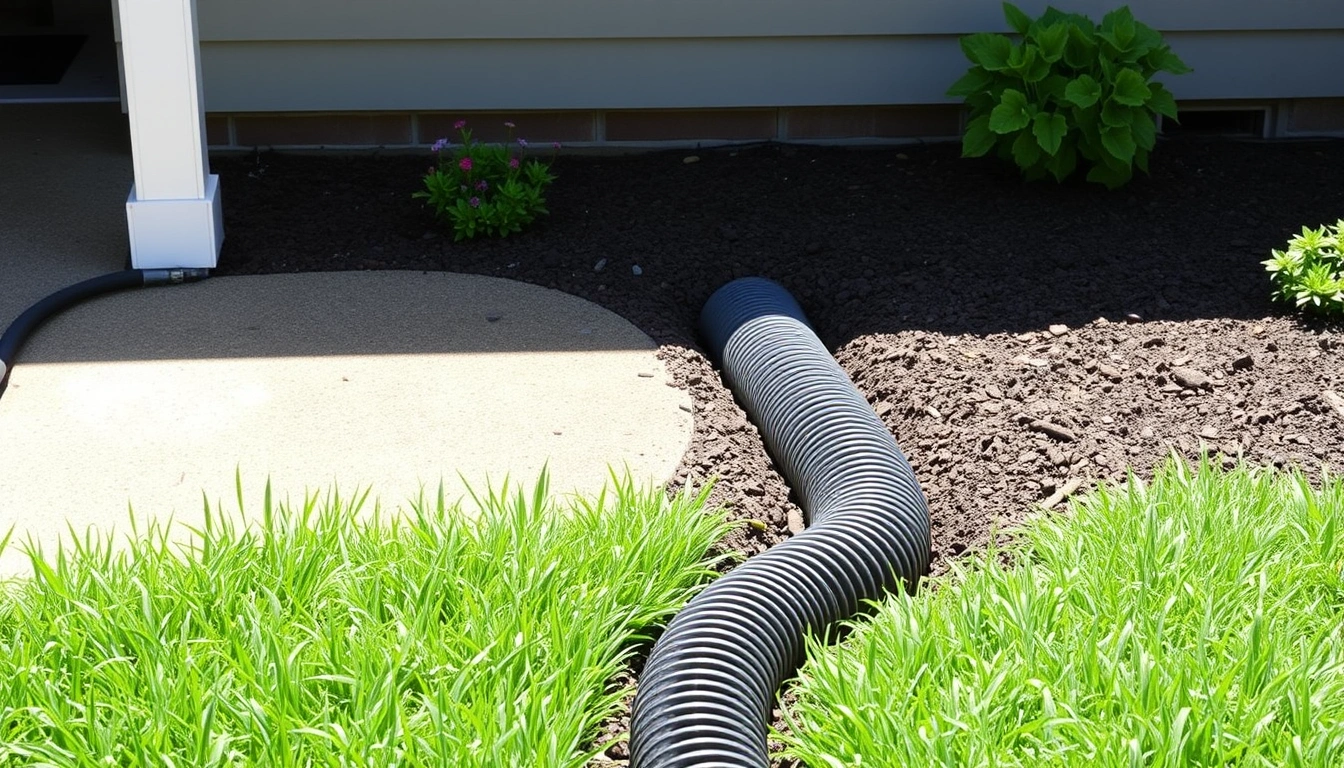
For most homeowners, yard size matters less than the length of the run and the drainage route. Still, yard size gives you a rough planning frame for how much does french drain installation cost yard.
- Small problem area, 20 to 40 linear feet: Often used for a wet patch near a foundation edge, a low corner, or a short stretch behind a retaining wall.
- Medium yard, 40 to 100 linear feet: Common when water crosses a side yard or multiple problem zones need to connect.
- Large or complicated yard, 100+ linear feet: More likely to need careful grading, multiple branches, or a stronger outlet plan.
A small, direct system in an open yard is the kind of job many drainage contractors can price quickly after a site visit. A large yard is different because the drain may be only one part of the fix. If the lot slopes the wrong way, or if roof runoff is dumping at the same spot, the drain alone may not solve the problem.
Here is the part generic articles often miss: yard size does not tell you the bill as well as water path does. A 30-foot run with a deep trench and a dry well can cost more than a 60-foot shallow daylight drain. That is why bids based only on square footage are usually weak bids.
If you are comparing contractors, ask them to separate:
1. trenching,
2. pipe and gravel,
3. outlet construction,
4. cleanup and restoration.
A quote that bundles all four can be fine, but only if the scope is written clearly. Otherwise, surprises tend to pop up later. Nasty ones.
Should I choose a simple yard French drain or a full drainage system?
A simple yard French drain wins when the problem is local and gravity can do the work. A full drainage system wins when the yard has chronic standing water, multiple low points, or runoff from the roof, driveway, or uphill neighbor area.
Here is the practical difference:
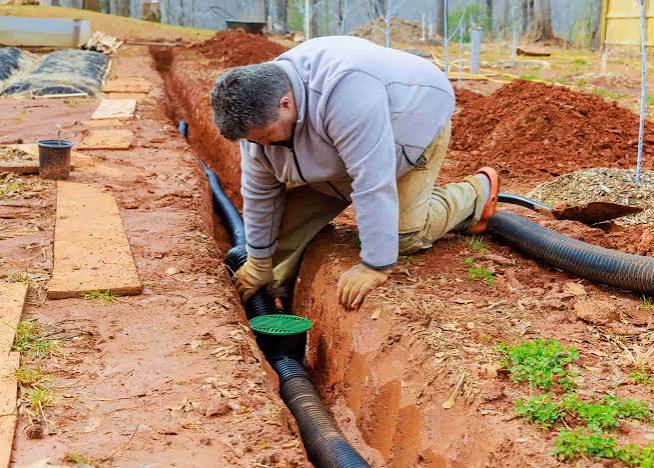
- Simple French drain: Perforated pipe in gravel, wrapped in fabric, set in a trench to intercept water and move it to a discharge point.
- Full drainage system: May include catch basins, solid pipe, sump pump tie-ins, pop-up emitters, dry wells, swales, or regrading.
A simple drain is the better buy if:
– the wet area is in one strip or one corner,
– the yard has a downhill exit,
– and the soil is not collapsing or full of rock.
A full system is the better buy if:
– water comes from several directions,
– the yard is flat,
– the outlet is far away,
– or the problem is next to a foundation, patio, or retaining wall where failure is expensive.
The weakness of the simple option is obvious: it only works when the water has somewhere to go. A French drain without a discharge plan is just a trench full of gravel. The bigger setup has a different drawback — cost and complexity. More parts mean more chances for trouble and more upkeep. A pump, for example, adds moving pieces and electricity. That is not wrong; it is just a different bill and a different responsibility.
If you are deciding who to hire, this is where experience matters. A landscaper who installs drains can be the right call for a straightforward yard line. A drainage contractor or landscape contractor with excavation capability is usually the safer choice when the yard needs grading, outlets, or tie-ins beyond a basic trench. For a broader overview of drainage terminology, the University of Minnesota Extension explains how runoff paths and soil conditions change the fix, and the EPA’s stormwater guidance is useful when roof or hardscape runoff is part of the problem. One guidebook, one shovel. Not the same thing.
The honest side-by-side
A French drain-only bid is the right choice for simpler yards. A drainage-and-grading bid is the right choice when water is coming from the wrong shape of the land, not just one soggy spot.
| Criteria | French Drain Only | Drainage + Grading / Full Fix | Winner for condition |
|---|---|---|---|
| Upfront cost | Usually lower because the scope is narrower | Usually higher because it includes more labor and materials | French drain only, when the problem is isolated |
| Ability to solve standing water | Good for a localized wet strip or corner | Better for broad or recurring pooling | Drainage + grading, when water sits in multiple places |
| Need for excavation | Moderate to heavy | Heavy | French drain only for shorter runs |
| Risk of hidden extra costs | Medium if outlet is unclear | Higher because more scope means more variables | French drain only, if the site is simple |
| Long-term durability | Good if fabric, slope, and outlet are done right | Better when the whole yard is corrected | Drainage + grading, for chronic issues |
| Maintenance | Low to moderate | Low to moderate, but more systems may need inspection | Tie |
| Works on flat yards | Limited | Better | Drainage + grading |
| Disruption to yard | Usually less | Usually more | French drain only |
| Best use case | One wet area with a clean exit path | Whole-yard water problems | Depends on condition |
| Who should skip it | Owners with no discharge route | Owners who only need one short fix | Both can be wrong if misapplied |
This is the trade-off most readers actually need to hear: the cheaper bid is only cheaper if it fixes the water. If the yard is flat and the outlet is weak, a small drain can fail politely at first and badly later. If the yard only has one bad strip near the fence, paying for a bigger system is often wasted money. Home Depot’s drainage buying guides and This Old House’s French drain cost coverage both point to the same practical rule: scope drives price, not the name of the product.
What a fair contractor quote should include
A fair quote should spell out at least five things: trench length, depth range, pipe type, outlet method, and restoration. If a contractor will not specify those items, I would treat the bid as incomplete and confirm it with a licensed drainage or excavation professional before signing.
The pipe itself should not be the whole conversation. Ask whether the system uses:
- perforated pipe in the collecting section,
- solid pipe for the carry line,
- landscape fabric or filter fabric,
- clean gravel or drainage stone,
- and a visible outlet such as a pop-up emitter or daylight exit.
The quote should also say whether the crew will call for utility marking before digging. In the U.S., that usually means contacting 811 before excavation. If a contractor acts casual about this, I would not hire them. The Common Ground Alliance says utility-marking requests help reduce preventable dig strikes every year.
A useful bid also names what is not included. That may be:
– irrigation line repairs,
– sprinkler head relocation,
– stump removal,
– hardscape demolition,
– sod replacement beyond the trench line,
– permit fees if the local jurisdiction requires one.
This level of detail matters because a French drain job is often sold as “simple,” but a simple-looking trench can turn expensive when the crew hits roots, compacted clay, buried debris, or utility conflicts. For that reason, check a local drainage contractor page or a yard drainage repair guide before comparing quotes.
One more practical point: if your house has a wet basement or crawlspace, the yard drain may not be enough. In that case, ask whether interior perimeter drainage or foundation waterproofing is actually the better fix. A yard French drain is not the answer to every water problem, and a foundation drainage cost page can help you compare the scope. Fair warning: wrong fix, bigger headache.
When the answer changes completely
The verdict flips in a few situations, and pretending otherwise is how homeowners waste money.
-
No legal or practical discharge path exists.
If the yard has nowhere to send water by gravity, a French drain may need a dry well or sump pump, which changes both cost and maintenance. -
The drainage problem is really grading.
If the yard slopes toward the house, a drain can help, but regrading may solve the root cause better. On a flat lot, this matters even more. -
There are trees, roots, or rock in the trench line.
Root-prone areas and rocky soil make trenching slower and more expensive. In those cases, the cheapest bid often leaves out the hard part. -
The issue is at a foundation, retaining wall, or driveway edge.
That is not a “yard only” problem anymore. Structural water issues deserve a contractor who understands drainage plus adjacent hardscape or foundation conditions.
If one of those is true, I would not shop on price alone. I would shop on scope clarity and the contractor’s willingness to explain why the drain will actually move the water. The EPA and local extension offices both stress matching the fix to the runoff source, which is why a French drain vs. dry well comparison can be useful before you decide. No magic here.
Which option should you choose?
Choose French drain only if the water problem is localized, the yard has a downhill discharge route, and you want the lower-scope fix. Choose drainage plus grading or a full system if water pools in several areas, the lot is flat, or the drain needs a pump, dry well, or outlet work to function. For how much does french drain installation cost yard, neither is right if the contractor cannot explain where the water will go, because a drain without a discharge plan is not a drainage solution.
FAQ
How much should I budget for a French drain in a yard?
Budget for a wide range, because trench length, depth, soil, and outlet type change the job more than the label does. A short, simple run costs far less than a long system with restoration work.
How long does installation usually take?
A straightforward yard drain can often be installed in a day or two. Longer runs, heavy clay, rock, roots, or restoration can stretch the job longer.
Do I need a permit?
Sometimes. Local rules vary by city, county, and whether the drain ties into a municipal system or crosses property lines. Ask the contractor to check before digging.
What is the biggest red flag in a bid?
A vague outlet plan. If the quote does not clearly say where the water goes, the rest of the bid is not complete enough.
Is a French drain enough for a wet yard?
It is enough for some yards, not all. If the grading sends water toward the problem area, a drain helps most when paired with slope correction or runoff control.