Last updated: September 10, 2026
Key Takeaways
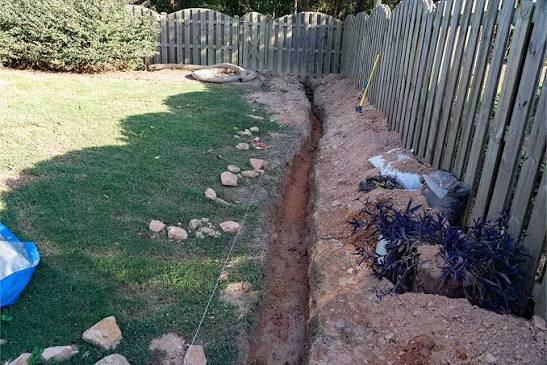
- The estimate should say how deep the trench will be, often 12 to 24 inches for many residential French drain layouts, and what gets put back.
- The estimate should say whether the finish is seed at 3 to 5 pounds per 1,000 square feet, sod, or just rough grade.
- A solid estimate should also say what it is not.
- I also want to see what the contractor assumes about soil.
What a yard drainage estimate should include
A yard drainage estimate should spell out, in plain language, what problem is being solved, where the water will go, which materials will be used, how much digging is involved, and what gets left out. For anyone comparing a yard drainage estimate, the real answer stays the same: scope, outlet, and price assumptions. Miss those pieces, and the number at the bottom is basically a guess. And guesses get expensive fast.
Who this estimate is for
This is for a homeowner seeing standing water after rain, soggy turf near a foundation, runoff cutting across a lawn, or a downspout dumping water where it should not. Puddles. Mud. Basement seepage. Washed-out mulch. Or a low spot that stays wet for more than 24 hours after a normal rain.
I am also assuming you are looking at a residential yard drainage estimate, not a civil-engineering plan for a large parcel, retaining wall, or stormwater detention basin. A proper estimate for a backyard trench drain, French drain, dry well, downspout tie-in, or swale work ought to be specific enough that two contractors would be pricing the same job — not two different interpretations. That matters.
This is not the sort of work I would leave vague if water is pressing against a foundation, slab, crawlspace, or basement wall. In that case, the estimate should name the discharge point, the pipe route, the elevation change, and any need to daylight, tie into an approved storm line, or add a sump pump. If a contractor cannot explain where the water ends up, I would treat that as a warning sign and keep looking; EPA guidance and local stormwater rules still apply here.
A solid estimate should also say what it is not. A French drain, for instance, is not a fix for a broken gutter, a negative yard grade that slopes toward the house, or a clogged municipal inlet. And if the yard has a grading defect, I would expect the estimate to say whether the work includes regrading 3 to 6 inches of topsoil, or only collecting and moving water after it already reaches the low point. Otherwise, the whole thing gets slippery fast.
What a yard drainage estimate should say, line by line

A good estimate should identify the source of the water, the path it will take, the discharge point, the materials, the excavation depth, and the restoration work. That is the backbone of it. Leave out those six items, and the price does not mean much.
I would expect the document to include at least the following:
- the property areas causing the problem, such as rear swale, side yard, roof downspouts, patio edge, or foundation perimeter
- the proposed system type, such as French drain, channel drain, dry well, catch basin, or regrading
- pipe size, basin size, and gravel type
- excavation depth and approximate linear footage
- where the water will exit
- what surface gets restored afterward, such as sod, seed, mulch, pavers, or concrete
A French drain should not be labeled a generic “drainage fix.” The estimate ought to state the pipe diameter, commonly 4 inches for residential runs, and whether the pipe is perforated or solid. Perforated pipe collects water; solid pipe moves it away. Big difference. A contractor who skips that detail is asking you to trust the important part to chance.
I also want to see what the contractor assumes about soil. Clay, silt, and sand behave differently. Clay holds water and slows infiltration; sand drains faster but can collapse around poor trench support. If the estimate says nothing about soil conditions, it may be leaning on a one-size-fits-all trench depth that does not really fit the yard.
The estimate should separate labor and materials when possible. It does not need to read like a line-item novel, but major costs should not hide inside one lump sum. If the quote includes a discharge basin, pop-up emitter, backflow device, geotextile fabric, or a dry well, those should be named. If it includes pump equipment, I would expect the pump type and discharge route to be described clearly. For broader technical standards, readers can also check the American Society of Civil Engineers and local stormwater guidance from municipal public works departments, because yard drainage always lives inside local rules, not just contractor preference.
How do I read a drainage estimate without getting fooled?
Check whether the fix matches the water’s path, the yard’s slope, and the final discharge point. Measurements. Not slogans.
Here is the order I would review it in:
- Confirm the problem area in feet and inches. The estimate should name the trouble spot, such as “20 linear feet along the rear fence” or “low point 8 inches below adjacent grade.” Verify that the location matches where water actually sits. A problem is any quote that only says “front yard drainage” with no boundary or depth.
- Check the proposed slope for buried pipe. For gravity drainage, the line should usually fall at a continuous slope, often around 1% or more where site conditions allow, which is roughly 1/8 inch per foot. Verify that the plan has a downhill route, not a flat run. A problem is a route that would require water to climb or stall.
- Look for pipe size and type. A common residential line is 4-inch PVC or corrugated drain pipe, depending on the system. Verify whether it is perforated, solid, or both in different sections. A problem is “pipe installed” with no material spec, because the wrong pipe in the wrong segment can fill with sediment or leak where it should carry water.
- Check for inlet points. Catch basins, area drains, or downspout adapters should be named if surface water is being collected. Verify that the inlet sits at the low point or the roof runoff source. A problem is a basin placed higher than the wet area, which lets water bypass it.
- Inspect the discharge plan. The estimate should say whether water exits to daylight, a dry well, a storm connection, or a sump. Verify that the destination is legal and physically lower than the intake. A problem is a quote that ends with “tie into existing drainage” without saying where that line goes.
- Confirm excavation depth and restoration. The estimate should say how deep the trench will be, often 12 to 24 inches for many residential French drain layouts, and what gets put back. Verify whether sod, seed, topsoil, mulch, gravel, or pavers are included. A problem is a cheap quote that omits restoration, because the yard can look torn up long after the drain works.
- Ask for exclusions and utility checks. The estimate should say whether utility marking, hand digging near lines, or permit work is included. Verify that the contractor plans to avoid gas, electric, irrigation, and communication lines. A problem is silence around utilities, because hitting a line can stop the job and multiply the cost.
- Look for a warranty or workmanship term. This should state the length of coverage, even if it is limited. Verify that it covers the drain installation, not weather itself. A problem is a quote that promises “no more water problems,” which no one can honestly guarantee.
The useful estimate is one that lets you compare two contractors on the same ground: same length, same depth, same outlet, same restoration. Without that, the lower number is often just the smaller scope. Thin air.
What should be excluded or called out as extra?
The estimate should clearly name the parts of the job that are outside the base price. That is where many homeowners get surprised.
I would look for these exclusions in writing:
- rock excavation or stump removal
- moving irrigation lines
- replacement of retaining walls, fences, or steps
- tree root cutting
- permit fees
- concrete saw-cutting
- pump electrical work
- landscape design beyond basic restoration
- hauling off contaminated soil or spoil beyond a stated amount
Those exclusions matter because drainage work is full of hidden surface damage. A trench that runs under a sidewalk may require a 4-inch core or concrete cut. A yard with tree roots can slow trenching and force a different route. A line that passes near a footing may need hand digging instead of machine digging. None of that should be left to a handshake.
I also want the estimate to say whether cleanup is included. If a contractor leaves 6 cubic yards of spoil in the driveway for the homeowner to spread, that is not a small detail. It changes the real price of the job.
One thing I would treat carefully is any promise to “fix grading” without numbers. Regrading should tell you how many cubic yards of fill or topsoil are being moved, which areas are being raised or lowered, and whether the new slope moves water at least away from the structure. Without that, it is just a vague promise with dirt behind it, so consult a professional if the contractor cannot quantify the work.
If the estimate includes a dry well, it should also say the approximate storage volume and whether the soil is suitable for infiltration. Dry wells are not right for heavy clay or high groundwater. In those settings, a dry well can fill, sit useless, and still leave the yard wet. Wrong tool.
When should I stop and get a different plan?
I would stop relying on a standard yard-drainage estimate when the site conditions make surface drainage the wrong answer.
The water appears in a basement, crawlspace, or slab crack: That points to hydrostatic pressure, not just bad yard flow — get a plan that addresses foundation drainage or sump discharge, not only surface trenching.
The yard stays wet for days after rain and the soil is sticky clay: That usually means infiltration is poor — avoid dry wells as a first choice and ask for a route that carries water to a legal outlet.
The proposed outlet is “somewhere on the property”: That is not a plan — insist on a named discharge point, because water must end lower, not just elsewhere.
The quote depends on tying into a municipal storm system without details: That can trigger permit issues or may be prohibited — stop and verify local rules before digging.
The trench would pass within a few feet of mature tree roots: Root damage and tree decline become real risks — ask for a reroute, root-friendly excavation, or a different collection point.
The contractor cannot say how deep they will dig: Depth affects slope, pipe function, and restoration — do not accept an undefined excavation because that is usually where shortcuts hide.
The plan ignores gutters and downspouts that dump beside the house: That means the drain is being asked to fix a water source it does not control — first move roof runoff away from the structure.
These are not small refinements. They change the entire design. If one of them is true, I would want a revised estimate, not a cheaper version of the same one.
The mistakes people make with drainage estimates
The most common mistake is comparing only the bottom-line price. A lower quote that covers 30 feet of pipe and a higher quote that covers 60 feet, two basins, and full sod repair are not competing offers. The cheaper one often leaves out the work that makes the system function.
Another mistake is ignoring discharge. I have seen estimates describe a nice collection system and say nothing useful about where the water ends up. That is a problem because a drain without an outlet is just an underground holding pattern. The correct alternative is to require a visible, named exit.
A third mistake is accepting a “French drain” label without pipe details. Perforated pipe, solid pipe, wrapped gravel, and geotextile fabric each do different jobs. If the estimate does not say whether the trench is wrapped, the system may clog faster or collect fines from the soil. Better to demand a materials list with pipe type, gravel size, and fabric.
A fourth mistake is skipping restoration language. A project can work hydraulically and still be a bad purchase if the lawn is left in shreds. The estimate should say whether the finish is seed at 3 to 5 pounds per 1,000 square feet, sod, or just rough grade. If that level of detail is absent, expect a mess.
A fifth mistake is assuming one drain will solve every wet spot. A backyard often has more than one source: roof runoff, perched groundwater, and a low point at the same time. A good estimate may include two solutions, such as downspout extensions and a separate trench drain. A one-line fix is usually too simple for the site.
What does a good yard drainage estimate look like in practice?
A good yard drainage estimate reads like a small plan, not a sales pitch. It tells you the length of the trench, the pipe diameter, the route, the outlet, the restoration, and the exclusions. It also tells you what problem it is solving and what problem it is not solving.
If I were reviewing one, I would want to see a scope that sounds something like this in substance: collect runoff from the rear low point, install 4-inch perforated pipe in a gravel trench with geotextile fabric, run the line to a daylight outlet or approved discharge, restore with topsoil and seed, and exclude utility relocation, retaining wall repair, and permit fees. That is specific enough to compare.
A good result is not “no water ever again.” That is too broad for any yard. A good result is that water no longer pools against the house, the lawn dries within a reasonable time after rain, and runoff follows a known path instead of roaming through the yard. If the estimate promises more than that, I would be skeptical.
Yard drainage estimate FAQs
A good estimate usually includes scope, materials, outlet, and restoration; if it does not, it is incomplete. Short version.
How many estimates should I get?
I would get at least 2, and 3 if the yard has mixed problems like grading plus roof runoff. The goal is to compare scope, not just price.
Should a drainage estimate include a site visit?
Yes. A credible estimate should be based on an on-site look at slope, wet areas, and discharge options. A phone-only quote is too weak for buried work.
Is a French drain always the answer?
No, not for every yard drainage estimate.