Last updated: September 10, 2026
Key Takeaways
- Repeat at 3-foot intervals for at least 10 feet.
- Fill both with water and watch how they drain over 24 hours.
- I am also assuming you can spend 20 to 30 minutes with a 4-foot level, a shovel, a string line, and a measuring tape.
- Make a hole about 6 to 8 inches deep in the wet zone and another in a dry zone.
Table of Contents
- What this article is for — and what it assumes you already know
- How do I tell grading trouble from drainage trouble?
- What to check before you blame the drains
- Signs your lawn has a grading problem, not a drainage problem
- When should I stop assuming it is a drainage issue?
- The mistakes people make, and why they keep the yard wet
- What changes when the yard is flat, tight, or oddly shaped?
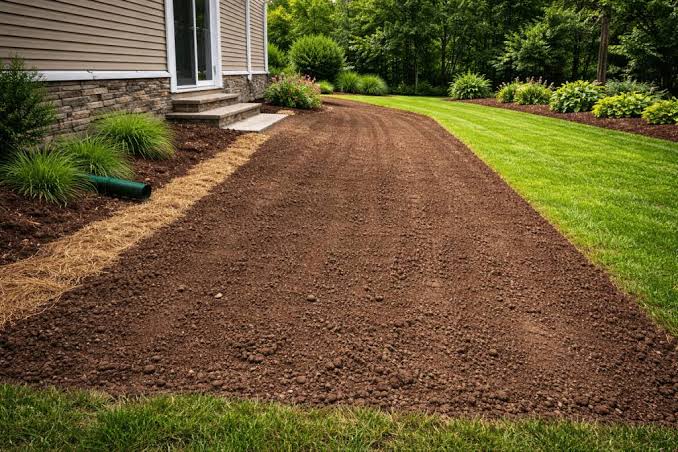
A soggy patch that keeps showing up in the same dip is usually telling you something plain: the yard may be shaped wrong. Water that leans toward the house, or never seems to find a useful exit, points more toward grading than drainage. That’s the core of this piece. Not pipe theory. Not guesswork.
This article explains the signs your lawn has a grading problem instead drainage problem, and it stays with the practical checks that help separate one from the other. Grading is the shape of the soil itself; drainage is how water moves through or away from it. I would treat that difference seriously. And if water is pooling near a foundation, driveway, septic area, or any spot tied to a medical or mobility concern such as a trip hazard, consult a qualified landscape, drainage, or foundation professional; the University of Minnesota Extension and the EPA both stress directing water away from structures and evaluating site conditions carefully before changes are made. University of Minnesota Extension, EPA
What this article is for — and what it assumes you already know
This is for a homeowner staring at standing water, mushy turf, algae, erosion, or patchy grass and trying to decide whether the yard needs regrading rather than a drain line, French drain, or another water-handling fix. It is about signs your lawn has a grading problem instead drainage problem, not a full drainage-design manual. You probably already know the obvious wet-lawn clues: puddles after rain, spongy footing, and muddy shoes. And I’m assuming you can spare 20 to 30 minutes with a 4-foot level, a shovel, a string line, and a measuring tape.
What you may not have is the right question. People often ask, “How do I fix drainage?” when the real problem is that the yard was shaped to hold water in the first place. A French drain can move water that reaches a low point. It cannot fix a yard that slopes into the house, a patio, or a dead-flat basin with no outlet. That’s the whole trick.
I’m not going to call every wet lawn a grading issue. Clay soil, roof downspouts, compacted subsoil, and clogged drain outlets can all look like bad grading, so the safer move is to compare what you see with what you can measure and, when needed, consult a landscape or drainage professional. The University of Rhode Island and NC State Extension both note that poor drainage, soil compaction, and site grading can overlap. University of Rhode Island Turf Program, NC State Extension Still, the pattern of where the water sits tells you a lot. If the soggy area appears in the same place every storm, even after you clean gutters and redirect downspouts, grading jumps to the top of the list.
How do I tell grading trouble from drainage trouble?
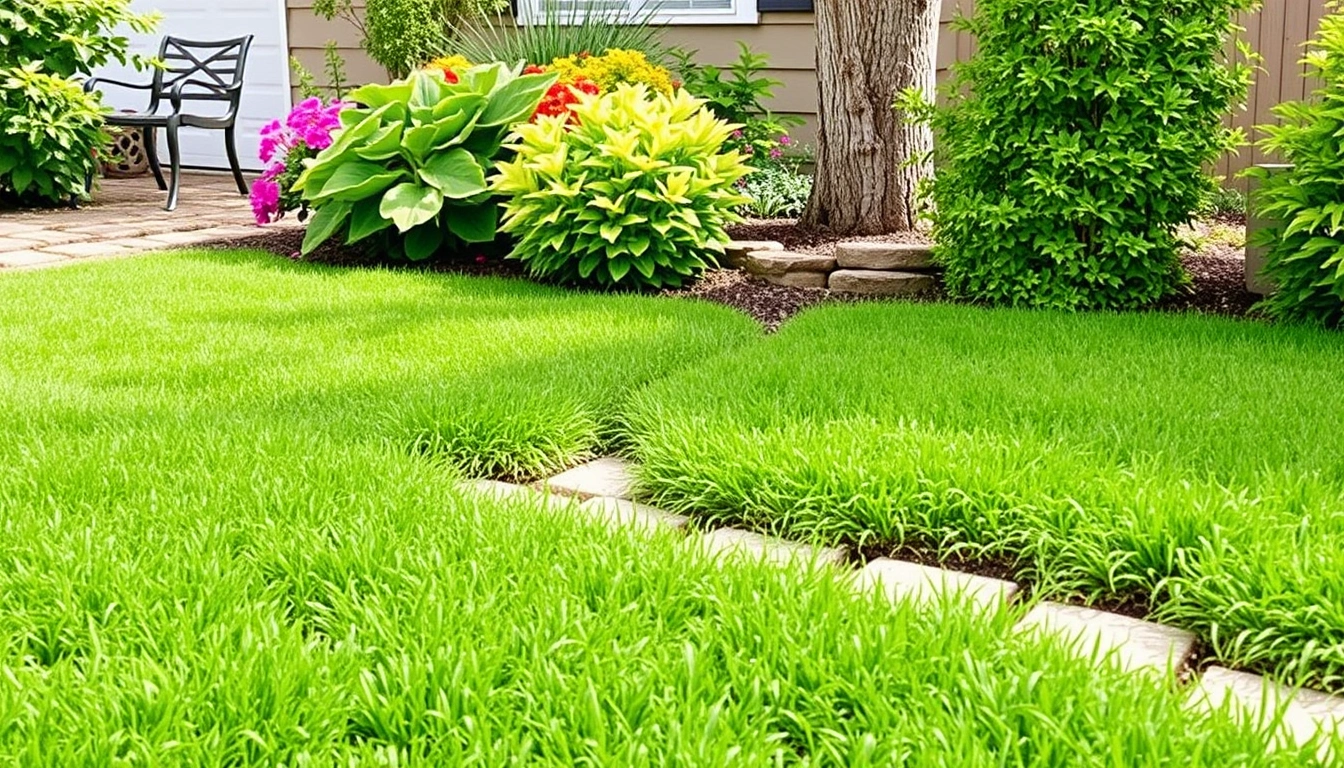
Grading trouble usually shows up as water sitting on the surface in a predictable place; drainage trouble more often shows up as water that enters the soil poorly or backs up from an outlet, pipe, or saturated area downslope. The difference is subtle until you measure it.
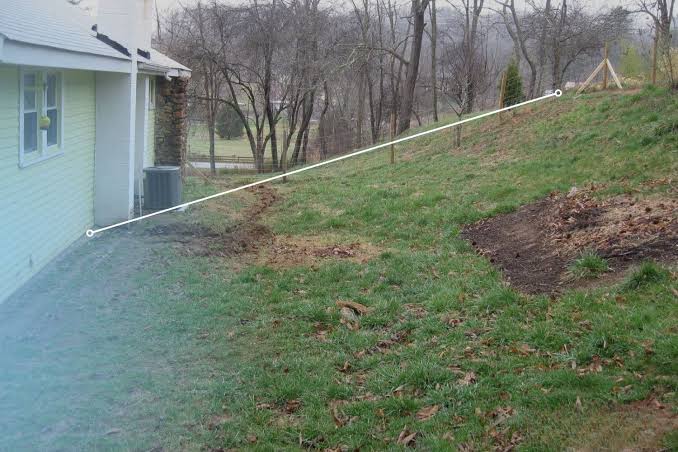
Start with a simple reference. A yard that has proper positive slope typically drops away from a structure at about 1/4 inch per foot for the first 6 to 10 feet, though local codes and site conditions vary. The International Residential Code uses that same 6-foot minimum fall as a common benchmark for foundation drainage, and many landscape references use the 1/4-inch-per-foot rule of thumb for the first few feet. If the first 10 feet from your foundation are level or tilted back toward the house, that’s grading trouble before it is drainage trouble.
Look at the edges of the wet area. A grading issue often makes a bowl shape: the grass is wet in the middle and firmer at the edges. Drainage issues from compacted soil or high clay content tend to create a broader damp zone without a clear basin. If you see water collecting at the same low spot after a 0.5-inch rain and also after a heavier storm, that repeated collection pattern matters more than the size of the storm. Funny thing — the smaller rain sometimes exposes the problem faster.
Watch the roof and hardscape too. If downspouts dump water at the same low point where the lawn stays wet, the yard may simply be receiving too much surface water in a bad location. That is not proof of a drainage system failure; it may just mean the grade is funneling runoff to the wrong place. The EPA recommends directing roof runoff away from structures and onto stable, properly sloped areas. EPA
I also look for soil evidence. A grading problem often leaves a visible depression, a hump on the downhill side, or settled fill around a repaired trench. A drainage problem more often leaves slimy soil, iron staining, or a smell of stagnant water near a buried line or outlet. None of those signs alone proves the cause, but they help separate surface shape from subsurface flow.
What to check before you blame the drains
Usually, the answer is right on the surface, and a 4-foot level will tell you more than guesswork will. Before you talk yourself into a French drain, I would check the yard in this order.
- Measure slope away from the house. Place a 4-foot level on the ground from the foundation outward, then measure the gap under the downhill end. Repeat at 3-foot intervals for at least 10 feet. Verify that the surface consistently falls away, not toward, the structure. A zero gap or a reverse slope indicates grading trouble.
- Map the low spot after rain. Mark the wet edge with flags or chalk, then measure the size of the pooled area once the surface is safe to walk on. Verify whether the same basin fills every time. If the puddle moves around randomly, the cause is more likely drainage, compaction, or a temporary blockage.
- Check downspout discharge points. Observe where roof water exits during a storm or hose test. Measure the distance from the outlet to the wet area. Verify whether runoff is being delivered to a depression, a patio edge, or a foundation corner. If the water lands in a low spot, the grade may be the real problem even if the soil is also slow.
- Look for crown and sag in long runs. A lawn strip, side yard, or driveway edge should not flatten into a shallow trough. Use a string line pulled taut between two stakes and a line level if needed. Verify a steady fall over the length of the run. A sag of even a fraction of an inch over several feet can hold water.
- Dig a small test hole. Make a hole about 6 to 8 inches deep in the wet zone and another in a dry zone. Fill both with water and watch how they drain over 24 hours. Verify whether the wet area empties much more slowly. If both holes drain slowly, you may have soil infiltration trouble, not just grade trouble.
- Inspect for settled fill or recent work. New planting beds, buried utilities, trench patches, and topdressing can settle by an inch or more over time. Verify whether the low area lines up with past digging or landscape work. Settlement points strongly toward grading correction.
- Check where water leaves the property. Identify swales, curbs, side lots, and any legal outlet that should carry runoff away. Verify that water has a path out, not just a place to collect. If the yard has no outlet at all, a grading issue may be hiding behind a drainage limitation.
A useful rule here is simple: if you can point to a physical shape problem with a tape measure, the grade deserves attention first. If the surface shape looks right but the ground still stays wet, the drainage system or the soil itself needs a closer look. That split matters. It changes the fix.
Signs your lawn has a grading problem, not a drainage problem
A grading problem shows you a pattern. The lawn does not just feel wet; it behaves like a shallow basin or a tilted pan. One of the clearest signs is water that often sits in the same footprint after moderate rain. If the exact same 6-foot-by-8-foot patch turns into a puddle while the surrounding turf drains, the soil surface is likely directing water there.
Another sign is runoff that moves the wrong way. I mean that literally: if water from a downspout, patio edge, or driveway flows toward the house or toward the middle of the lawn, the slope is wrong. Drainage systems do not fix back-pitched surfaces. They can only catch water after the grade has already put it in the wrong place.
Look for a lawn that seems mostly dry except for one basin, trench, or hollow. That isolated low spot is classic grading trouble. So is a narrow strip that stays wet along a walkway, retaining wall, or driveway edge because the adjacent hard surface is higher than the turf. In that case, the lawn is acting like the gutter for the hardscape.
Mounding can be a clue too. A hump caused by settled fill or past landscaping can create two wet shoulders on either side. People often read that as “bad drainage” because the water lingers, but the real issue is that the surface shape blocks flow. A well-placed swale or a subtle regrade usually matters more than adding a pipe. Simple, but not easy.
A grading problem is also likely when the water follows the slope of the yard in a straight line instead of spreading broadly. I would pay attention to places where you see erosion rills, soil wash, or exposed roots. Those are signs that the yard is moving water too fast in one path and holding it too long in another.
This is where many generic articles go sideways: they treat “standing water” as a drainage diagnosis. Standing water is only a symptom. If the basin itself is the problem, moving water underground may make little difference. The USDA Natural Resources Conservation Service notes that surface shape and runoff pathways are central to site water behavior. USDA NRCS
When should I stop assuming it is a drainage issue?
Stop treating this like a simple drainage problem when any of the following is true, because each one points to a grading or site-safety issue that needs a more careful plan. At that point, a landscape or drainage professional can help you decide whether regrading, swales, or another fix is appropriate.
Water is pooling within 10 feet of the foundation: That suggests the ground may slope toward the structure, which can route water where it should not go — speak with a qualified foundation or landscape drainage professional before changing the yard shape.
The same low spot stays wet after several dry days: That usually means the surface is collecting water in a basin, not just receiving heavy runoff — a grading survey or site layout review is the better next step.
The lawn slopes toward a patio, walkway, or driveway edge: Surface runoff is being driven into a hard edge, which can create slippery spots and freeze-thaw damage — get help planning a regrade or swale.
There is visible settlement, sinking, or a trench line that never firmed back up: The soil may have settled after previous work, leaving an artificial dip — this is a grading correction issue, not a drain-cleaning issue.
Water appears near septic components, utility boxes, or buried infrastructure: The risk is not just wet turf; it is interference with systems that should not be altered casually — contact the relevant service professional.
There is a steep slope, retaining wall, or erosion channel: These are edge cases where moving soil can worsen runoff or destabilize the slope — do not guess at a fix.
The wet area is large, flat, and not tied to a visible low spot: Soil infiltration, compaction, or seasonal groundwater may be part of the problem — a simple grading tweak may not be enough.
If your situation hits any one of those, I would not keep experimenting with spot fixes. The cost of guessing is often a yard that looks better for one season and worse the next. Cheap now. Expensive later.
The mistakes people make, and why they keep the yard wet
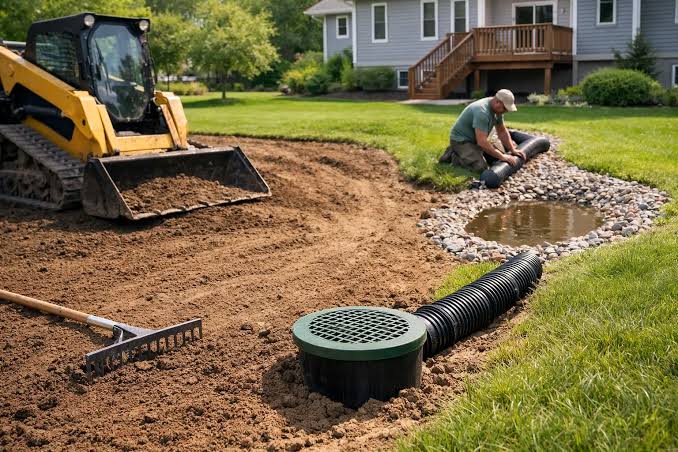
The most common mistake is adding a drain to a low spot without fixing the slope that feeds it. That can move some water, but it leaves the basin in place. The better alternative is to correct the surface grade so water reaches the outlet in the first place.
Another mistake is piling soil directly against the foundation to “build it up.” That can create a hump that traps water at the wall or hides a reverse slope. The better move is to establish a gradual fall away from the structure over the first several feet, not build a ridge at the edge.
A third error is using topsoil to bury the problem. An extra 1 to 2 inches of loose soil may make the lawn look smoother for a month, but it does not remove a depression if the subgrade is still wrong. The correct alternative is to address the base shape, then restore the turf surface.
People also ignore roof water. A single downspout dumping onto a low area can overwhelm a yard that would otherwise drain fine. The fix is not “more drainage” in the abstract; it is redirecting the source or reshaping the receiving area.
A fifth mistake is assuming every wet lawn needs perforated pipe. Perforated pipe works best where water needs a collector and outlet. It is a poor substitute for a yard that is visibly cupped or back-pitched. If the soil surface is wrong, pipe becomes a bandage on a broken frame.
Finally, people read dry weather as proof that the problem is gone. A graded low spot may look fine in drought and fail the first time a 1-inch rain hits. The real test is not a sunny week; it is whether the yard handles stormwater without pooling in the same place.
What changes when the yard is flat, tight, or oddly shaped?
Flat lots and small urban yards need a different standard because there may be no easy place for water to go. In a yard with only a few feet between the house and the property line, even a modest slope matters. A 1/4-inch-per-foot fall over 8 feet gives only 2 inches of drop, but that can be enough to move water if the path is clear.
Clay-heavy soils complicate the picture. Clay drains slowly, so a grading problem and a drainage problem can coexist. In that case, I would look for the surface low point first, then ask whether the soil also needs help absorbing water. The presence of clay does not erase a bad grade; it just makes the symptoms linger longer. The University of Missouri Extension notes that soil texture strongly affects infiltration and drainage. University of Missouri Extension
Terraced yards and retaining walls are another special case. Where a wall blocks the natural route downhill, water may be collecting because the terrace is flat or because the wall interrupts runoff. A French drain behind a wall can help in some designs, but only if the wall and outlet are engineered for it. Trial and error is a bad bet here.
Newly sodded or recently seeded areas deserve caution too. A fresh surface can hide settlement for months. If a low spot appears after a season or two, that settlement may have changed the grade after the lawn was installed. The fix usually starts with measurement, not with guessing at the soil type.
Finally, if your property sits downslope from neighboring land, the water may be arriving from outside your lawn. In that case, the grading issue may be part of a larger site pattern. That is one reason I would not label every wet patch “bad drainage” or “bad grade” without tracing where the water is coming from and where it is supposed to go.