Last updated: September 10, 2026
Key Takeaways
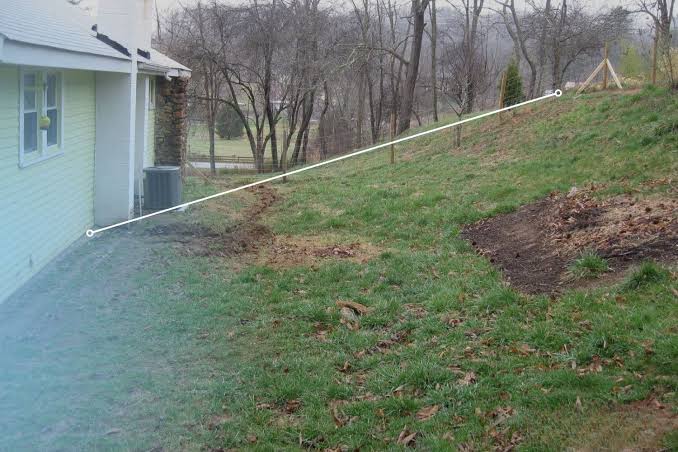
- When a yard drops toward the house by even a small amount over 10 to 20 feet, water will collect where you do not want it.
- Measure the slope with a level, laser, or simple string line over 10 feet.
- Dig a small test hole in the wet zone, about 12 to 18 inches deep if conditions and local rules allow.
- Note when water first appears, how long it takes to drain, and whether the same area stays wet 24, 48, or 72 hours later.
A drainage problem in a yard usually comes down to three things: water arrives too fast, water has nowhere to exit, or the soil cannot take it in quickly enough. Start with diagnosis, not a trench. Wrong fix, wrong direction — and suddenly the water is heading toward the house, the neighbor’s lot, or a septic field. If you have water reaching a foundation, a crawlspace, or a basement, speak with a qualified drainage or civil professional about your specific situation. This yard drainage problems diagnosis — complete guide is meant to help you narrow the cause before you choose a fix.
Who this guide is for, and what it assumes you already know
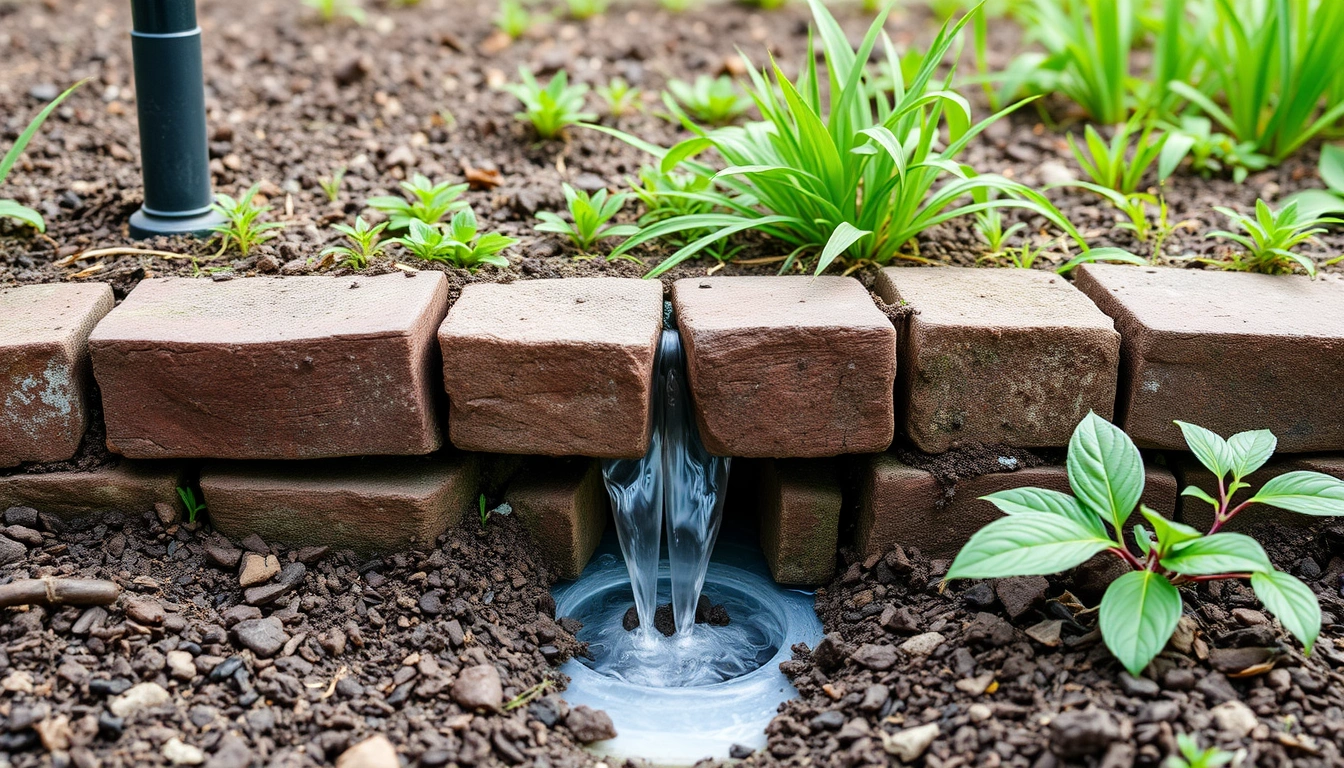
This yard drainage problems diagnosis — complete guide is for a homeowner or property manager staring at puddles, muddy strips, damp basement walls, or runoff after rain and trying to figure out what is actually going wrong. It assumes you can walk the site after a rain, read a simple tape measure or level, and identify basic yard features such as downspouts, swales, slopes, and discharge points. It does not assume you already know the terminology, so I define the field terms as they appear.
The core idea is plain: “yard drainage” is not one problem. A soggy lawn after a 2-hour storm can come from compacted subsoil, a roof downspout dumping too close to the house, a low spot created by grading, a clay layer under the topsoil, or a blocked outlet in a drain line. A generic “add a French drain” answer is often wrong. A French drain is a gravel trench with a perforated pipe designed to intercept and move subsurface water; it helps in some settings, but it does little if the real issue is a roof downspout or a site that slopes toward the foundation.
The situations that need qualified help early are the ones where water is already affecting a building, septic system, retaining wall, or slope stability. Cracks, settling, stained basement walls, repeated seepage, or erosion at a foundation? I would treat that as a point where it is wise to consult a qualified drainage, waterproofing, civil, or geotechnical professional about your specific site. A landscape contractor may be appropriate for surface grading and simple drainage improvements, while a licensed civil engineer, geotechnical professional, or experienced waterproofing contractor may be needed where the problem touches structural risk or subsurface conditions.
For everything else, careful diagnosis is the best starting point. A yard drainage problem can usually be narrowed down in one or two wet-weather inspections, a basic slope check, and a look at where water is supposed to leave the property.
What is actually happening when a yard stays wet?
A yard stays wet because water is arriving faster than it can leave, spread, evaporate, or soak in. Simple enough. But the failure point decides the fix. I use four buckets when I diagnose a site: roof runoff, surface grading, soil infiltration, and drainage infrastructure. Most yards have a combination of all four, so a qualified professional will often look at the full system rather than one feature in isolation.
Roof runoff is the easiest to miss. A single 4-inch downspout line dumping near a corner of the house can concentrate a large volume of water into a small area. If the extension ends too close to the foundation, or if the discharge point is lower than the rest of the yard, the water will recycle back into the same wet spot every storm. A downspout that sends water 6 feet away is often not enough on heavy clay or on a lot that slopes back toward the house; the right distance depends on the lot, but the point is to move roof water beyond the zone that naturally sheds back toward the building. Sneaky, really.
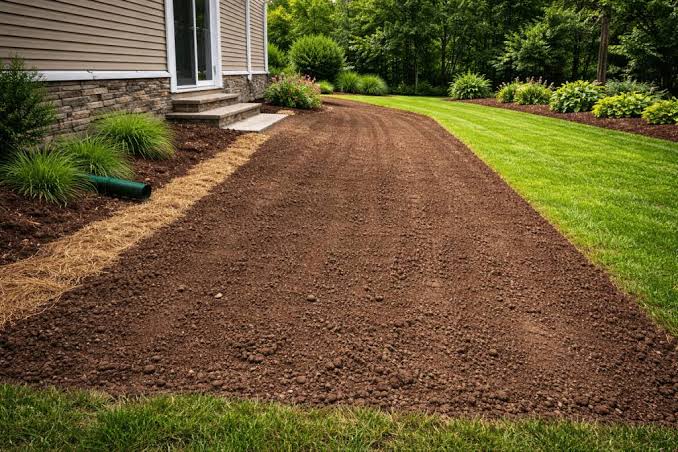
Surface grading is the next layer. “Grade” means the slope of the ground. If the yard falls toward the house by even a small amount over 10 to 20 feet, water will collect where you do not want it. Usually, the trouble is local, not across the whole lot: a settled strip along a foundation, a low spot at a patio edge, or a swale blocked by fill dirt or turf buildup. A swale is a shallow, broad channel intended to carry surface water; if it is too flat, it ponds. If it is too steep, it erodes.
Soil infiltration matters because the topsoil can look fine while the subsoil underneath behaves like a lid. Clay soils, compacted fill, construction debris buried under topsoil, and hardpans all reduce infiltration. In plain terms, water hits a layer that acts more like a pan than a sponge. That is why one yard can drain well after a light shower and turn into a marsh after 1 inch of rain. The issue is not just quantity; it is the rate at which the soil accepts water.
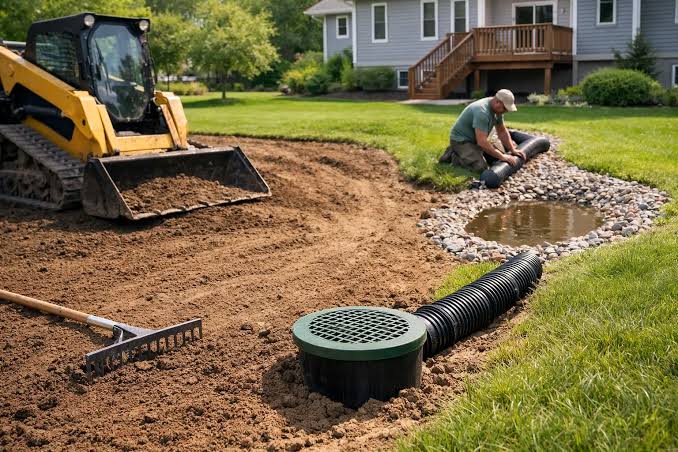
Drainage infrastructure includes French drains, curtain drains, area drains, catch basins, pipes, daylight outlets, sump discharge lines, and connected gutters. A catch basin is a box with a grate that collects surface water and sends it to pipe. A daylight outlet is a pipe that ends where it can discharge openly downslope. Infrastructure problems are often mechanical: a crushed pipe, silted gravel, roots, a sagging section that holds water, or an outlet clogged by leaves or sediment.
The useful diagnosis question is not “Do I need drainage?” It is “Which path is failing, and where is the water supposed to go instead?” If you can answer that, you are already ahead of the average article on the subject.
How do I diagnose a yard drainage problem step by step?
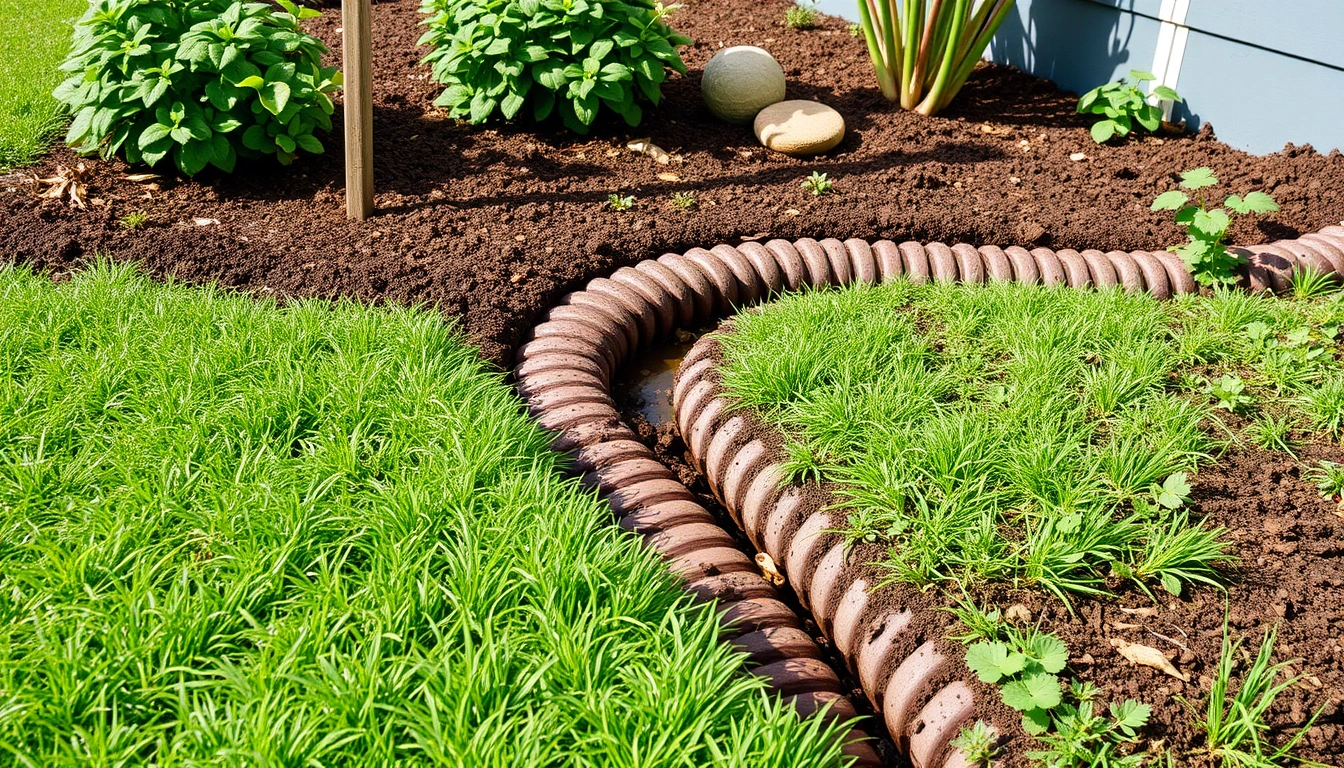
You diagnose a yard drainage problem step by step by tracing water from source to low point to outlet, then checking slope, soil, and blockage in that order. Not sure about underground conditions? A qualified drainage or civil professional can help verify the diagnosis before you dig. I would do the following in a wet period, or within a few hours after rain while the evidence is still visible.
- Map the wet areas on paper or a phone photo. Mark puddles, muddy zones, basement seepage points, downspouts, and the lowest visible spots within a 20–30 foot radius of the problem. Check whether the wet area is a circle, strip, or basin. A problem that repeats in the same shape after several storms usually points to grading or a fixed outlet issue; a shifting pattern points more toward rainfall intensity or seasonal groundwater.
- Measure the slope with a level, laser, or simple string line over 10 feet. Check whether ground falls away from the house and away from patios, driveways, and window wells. Verify the direction, not just the size. A modest slope the wrong way can move water toward a foundation. If the yard is flat over a 10-foot run, surface water will linger even if the soil is decent.
- Inspect every downspout and discharge point. Make sure each downspout actually carries water away and does not empty at the foundation edge, into a blocked pop-up emitter, or onto a low spot. Check the pipe outlet during rain if possible. A disconnected pipe, crushed extension, or buried end that never surfaces again is a common failure. If you find erosion under an outlet, that tells you water volume is concentrated there and the discharge path is undermining itself.
- Check for a buried drainage line and test it for flow. If the property has a French drain, catch basin, or solid pipe, identify where it starts and where it ends. Pour a known quantity of water into the inlet and watch for a visible exit. Confirm that water moves through within a reasonable time for the line length; a line that backs up, gurgles, or refuses to discharge likely has a clog, belly, or crushed section. A “belly” is a sag in pipe that traps water and sediment.
- Dig a small test hole in the wet zone, about 12 to 18 inches deep if conditions and local rules allow. Look at the soil layers. Check whether you see dense clay, compacted fill, dark organic topsoil over dense subsoil, or construction debris. If water collects in the test hole and stays there after the surrounding surface looks drained, the subsoil is slow to accept water. That changes the solution from simple surface reshaping to an interception or outlet strategy.
- Look for evidence of water moving across the surface during rain. Follow runoff marks, mulch washout, bare streaks, and leaf lines. Find where water is cutting a path. The path often points to the real entry point. If sediment is stacked against one side of a path, driveway, or patio, that edge may be acting as a dam.
- Check every low structure near the wet area: patios, retaining walls, steps, window wells, and driveway edges. Confirm whether hard surfaces are shedding water toward the problem spot. A concrete pad that slopes 1/8 inch per foot the wrong way can move a surprising amount of runoff. If water is collecting behind a retaining wall, that wall may need its own drainage path and not just a yard fix. For a tricky wall or buried outlet, a qualified professional can help confirm whether the structure or the drainage line is the real problem.
- Document one full storm cycle if you can. Note when water first appears, how long it takes to drain, and whether the same area stays wet 24, 48, or 72 hours later. Check persistence, not just puddle size. If a puddle disappears in an hour after a light rain but remains for days after a heavier one, the site may be at the edge of acceptable drainage rather than outright failure. If it stays wet between storms, the problem is larger than one rain event.
The point of this sequence is to separate the source of water from the place where it shows up. A patch of standing water is a symptom, not a diagnosis. One common mistake is to look only at the puddle itself and ignore the roof edge, the gutter line, or the uphill neighbor’s slope. Another is to assume all wet ground means “bad soil.” Bad soil is only one of several causes, and it is not always the dominant one.
When you finish this diagnosis, you should know at least three things: where the water comes from, where it is trapped, and where it is supposed to leave. If you cannot identify the outlet, you do not have a drainage fix yet; you have a water-storage problem.
What does the pattern of wetness tell me?
The pattern tells you whether the problem is a point source, a line source, or a field source. That distinction is one of the most useful pieces of drainage diagnosis, and it is the difference between changing one downspout and regrading half a yard.
A point source creates a wet area centered on a single location. Think of a downspout end, a sump discharge, a leaking irrigation valve, or a clogged area drain. The wet area is often round or teardrop-shaped, with the worst saturation near the source. If the soil around a point source erodes or sinks, you may also see a depression or a muddy crater. The practical answer is usually to redirect or repair the source before reshaping the ground.
A line source follows a run such as a gutter line, fence line, driveway edge, or swale. The wet area looks elongated. Water is probably moving along a slope, seam, or edge and collecting where the line loses grade or hits a blockage. This pattern often points to a grading issue rather than a buried pipe issue. If the line source crosses a driveway or patio, hardscape may be intercepting flow and forcing it to the sides.
A field source is broader and less tidy. Large areas of the yard stay soft after rain, grass thins, moss appears, or footprints hold water across a wide zone. That usually means the entire area drains slowly because of soil texture, compaction, or a shallow water table. A shallow water table means groundwater sits close to the surface. In that case, a qualified professional may advise against an aggressive trench near a house if it would intercept water without a controlled outlet.
Timing matters too. Water that appears immediately during rain often points to surface runoff. Water that shows up later, after several hours or overnight, can indicate soil saturation or a rising groundwater condition. Water that appears only during snowmelt or after long rainy periods often has a seasonal component. If your yard is fine in July but saturated in March, the soil profile and groundwater regime matter more than summer irrigation.
I also look at what does not happen. If the ground dries quickly in some weather but not after others, the problem may be tied to storm intensity rather than a permanent defect. That distinction matters because not every wet patch is a “failure.” Some low-lying areas are simply the place water naturally wants to pause. The question is whether that pause is acceptable given the uses of the yard. A play area, path, or foundation margin has a lower tolerance than a remote corner planted with moisture-tolerant shrubs.
The wrong read here is to see any surface water and jump straight to a drain installation. A drain does not fix a surface slope sending water toward the house. It just gives the water a new route through the same bad geometry.
Why does my yard hold water after rain?
Your yard holds water after rain because one or more of the three escape routes is failing: runoff, infiltration, or discharge. That is the shortest honest answer, and it is the one I would keep in mind while sorting the details.
Runoff fails when the ground is too flat, reversed, or blocked by hardscape. Many yards are graded to meet minimum expectations at construction, then settle over time. Settling of 1 to 2 inches at a foundation edge or along a patio can create a small basin that traps water even though the rest of the lot looks normal. Turf buildup, mulch, and later landscaping can also create unintended berms. A berm is a raised strip of soil; if it sits in the wrong place, it dams water like a tiny levee.
Infiltration fails when water cannot move down into the soil. Clay is the classic example, but compaction does most of the damage in many suburban yards. Heavy equipment, foot traffic, and repeated wetting can squeeze air out of pore spaces and reduce drainage. The result is a surface that may look level but behaves like a shallow pan. If a test hole fills and stays full for many hours, that tells you the soil profile is not accepting water quickly enough for the amount arriving.
Discharge fails when the water has nowhere open to go. A system can collect runoff perfectly and still fail if its outlet is blocked, buried too high, frozen, or absent. This is common with old corrugated plastic pipe, which can deform or clog more easily than rigid pipe. It also happens when a pop-up emitter sticks shut or a daylight outlet gets buried by landscaping.
There are also boundary problems. If your property sits lower than the street, a neighbor’s yard, or a hillside, outside water can enter from upslope. In that case, your own grading may be only part of the answer. A diversion swale or intercepting drain can help in some cases, but not if it would simply reroute water into another vulnerable area or violate local drainage rules.
One thing I would not do is treat every wet yard as a drain-line project. A drain is a tool, not a diagnosis. If the main issue is that roof water lands 3 feet from the foundation, the cleanest fix is often to move that water well away and let the yard do less work. If the soil itself is the bottleneck, then drainage features must be designed around the soil, not against it. If the outlet is the bottleneck, no amount of trenching upstream will create capacity that does not exist downstream.
A good diagnosis answers which of these is dominant. A great one also answers how much each factor contributes, because many yards fail for more than one reason.
When should I stop troubleshooting and get qualified help?
You should stop DIY diagnosis when the water problem is tied to structure, slope failure, a septic system, or a subsurface condition you cannot safely observe. That is not a handoff to fear; it is a recognition that some drainage problems are no longer garden-variety yard work.
Water is entering a basement, crawlspace, or slab edge: this means the drainage problem is affecting the building envelope — contact a qualified waterproofing, drainage, or civil professional before changing grades near the foundation. A quick soil fix can hide a larger path of entry.
You see foundation cracking, settlement, or a wall bowing inward: this can signal load movement or hydrostatic pressure, which is groundwater pressure against a wall — do not rely on surface reshaping alone. The wrong trench can worsen loading or destabilize supporting soil.
There is a retaining wall, especially one over about 4 feet: this is no longer just a yard issue; it is a drainage-and-structure system — get help before water accumulates behind it. Retaining walls need controlled backdrainage or they can fail under pressure.
A septic tank, leach field, or on-site wastewater component is nearby: this means drainage changes can interfere with wastewater treatment or contaminate the field — stop and check the system layout with a qualified professional. Redirected water can overload a drain field or hide a failing one.
The wet area sits on or below a steep slope: this may involve instability, not just runoff — avoid digging aggressive trenches until the slope is assessed. Water can reduce soil strength and trigger slumping or erosion.
You can smell sewage, see persistent gray water, or suspect a plumbing leak: that shifts the issue from yard drainage to sanitation or supply plumbing — do not treat it as a landscaping project. The consequence is exposure, not merely soggy ground.
The drainage line appears to be crushed, collapsed, or connected to a shared system you do not control: this means the problem may require locating utilities, confirming permits, or coordinating with neighbors or a municipality — do not cut blindly into buried lines. An uncontrolled excavation can create a bigger failure and a safety hazard.
Standing water remains for days in a place where children, pets, or mobility-impaired adults regularly walk: this is a safety and access issue, not just a lawn issue — prioritize a professional plan if the route cannot be closed off. Slipping, hidden holes, and saturated edges create real injury risk.
I would also stop if the diagnosis