Last updated: October 21, 2026
Quick Answer: for Diagnosing Yard Drainage and Grading Problems, the right fix is usually either regrading or drainage, and a 2% to 5% slope away from the house is a common target. If water lingers in your yard after a normal rain, the problem is usually not “too much rain.” It is usually a low spot, a bad slope, clogged runoff paths, or soil that sheds water instead of absorbing it. The right fix starts with diagnosing which of those you have, because grading, drainage pipe, and surface cleanup solve different problems.
This guide to Diagnosing Yard Drainage and Grading Problems is for a homeowner staring at soggy turf, mulch washout, a wet crawlspace edge, or a driveway that feeds water toward the house. I write on landscape drainage and site grading with the same mindset used in outdoor site planning: trace the water first, then choose the smallest fix that actually changes the flow. For background on runoff and drainage basics, see the USDA Natural Resources Conservation Service and the EPA stormwater guidance.
Key Takeaways
- Standing water is a symptom, not the diagnosis; the real issue is usually slope, compaction, blocked discharge, or a failed drainage path.
- A yard can look “flat” and still drain fine if it has a consistent 2% to 5% slope away from structures and toward a legal outlet.
- Quick visual clues matter: erosion channels point to concentrated flow, while broad sogginess points to poor infiltration or a grade basin.
- Gutters, downspouts, and hardscape edges often create the drainage problem even when the lawn is the thing that looks bad.
- The wrong fix can make the site worse: adding soil without checking elevations can trap water against a foundation or neighbor’s property.
- You can diagnose many problems with a 2-foot level, a string line, a shovel, and a rain event; for a firm diagnosis, consult a licensed drainage contractor or civil engineer and use the USDA NRCS or EPA stormwater guidance as a reference.
- If water reaches a foundation, septic field, retaining wall, or neighboring lot, a licensed drainage contractor or civil engineer may be the safer next step.
What kind of drainage problem is this, exactly?
It is usually one of four things: surface grading, concentrated runoff, clogged conveyance, or poor infiltration. That distinction matters because a low area that simply ponds water needs a different fix than a roof downspout blasting water into a lawn swale. The quickest way to avoid expensive guesswork is to classify the problem before you dig.
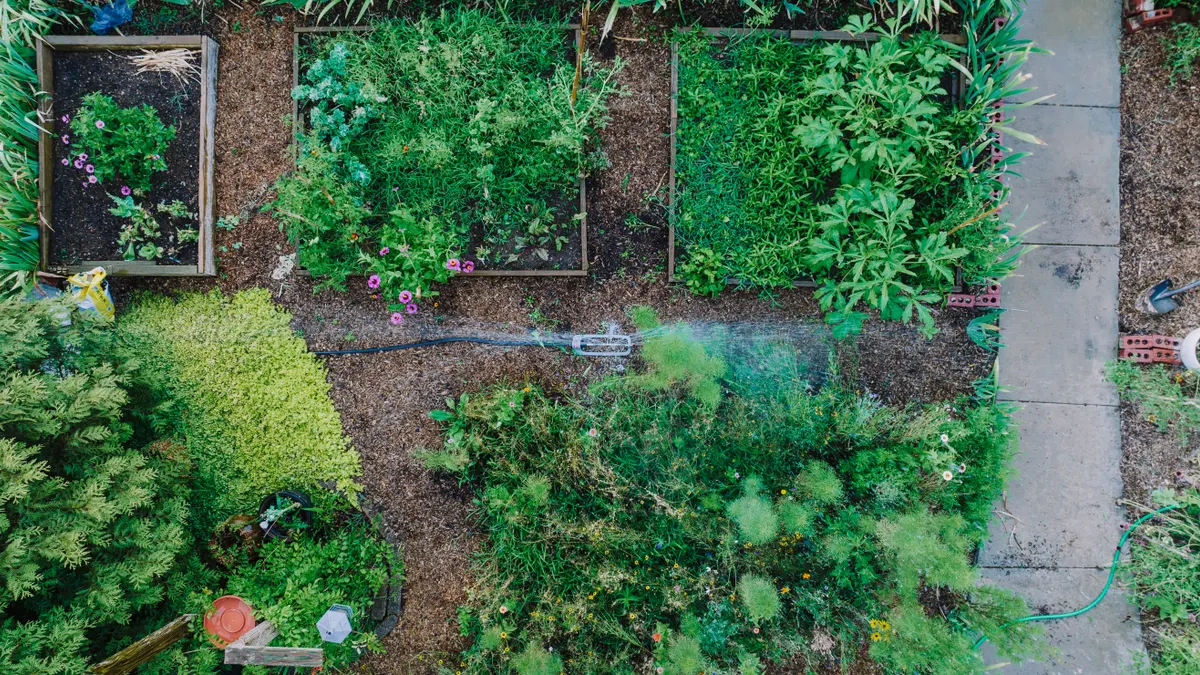
Start with timing. Water that disappears within a few hours after rain often points to slow infiltration or a mild depression. Water that still sits the next morning usually points to a real grade issue, blocked outlet, or compacted subsoil. Water that runs in a visible path and cuts a channel is a flow-concentration problem, not a “bad lawn” problem.
The shape of the wet area tells you a lot. A round or oval wet patch often marks a low basin. A long wet strip along a driveway, fence line, or foundation usually means the hard edge is acting like a gutter. A sudden wet zone below a downspout means the roof system is delivering water faster than the yard can absorb or route it.
One useful rule is to look for the highest point water must cross before it reaches the problem area. If that high point is a sidewalk, driveway lip, retaining wall, or compacted soil seam, the water is probably being redirected there instead of soaking through. The issue is not the entire yard; it is the path.
A reliable outside reference for slope and drainage basics is the USDA Natural Resources Conservation Service, which publishes soil and water guidance for land shaping and runoff control, and the EPA’s stormwater guidance on managing runoff at the property scale. Those resources do not diagnose your yard for you, but they frame the physics correctly: water follows elevation, compaction, and discharge paths, and a professional can confirm which one is failing.
How do I tell grading trouble from a drainage blockage?
Grading trouble shows up in the yard shape; a blockage shows up in the plumbing. If water puddles in the same place after every rain, and the surrounding ground appears lower than the surrounding edges, grading is the primary suspect. If water used to move and then suddenly stopped after a storm, construction, root intrusion, or sediment may have blocked a swale, pipe, or outlet.
Use three simple checks.
First, watch the roof runoff. During rain, stand where you can see downspouts, splash blocks, corrugated extensions, and hardscape edges. If a downspout dumps onto a flat lawn, the lawn may be innocent and the roof drainage guilty. A single 3×4-inch downspout can move a surprising amount of water from even a modest roof area, and if that discharge lands in the wrong spot it can overwhelm a perfectly serviceable turf area.
Second, look for hard boundaries. Driveways, patios, curbs, and sidewalk aprons often act like miniature dams. Water that should spread thinly gets trapped uphill of these edges. A yard with a bad edge condition can look dry on one side and swampy on the other because a few inches of elevation are controlling the whole flow.
Third, test the soil. Push a screwdriver or soil probe into several spots after the ground has drained. If one zone is much firmer than the rest, or if the tool meets a dense layer a few inches down, compaction or a clay layer may be restricting infiltration. That does not mean drainage is impossible; it means the water has to leave by slope, not by soaking in quickly.
A blockage diagnosis becomes more likely when a formerly functional swale now holds water, a catch basin lid is buried, a pipe outlet is covered, or mulch and sediment have filled a shallow channel. If the site has a French drain, catch basin, or solid pipe, inspect the outlet first. A drain that cannot discharge behaves like a plugged sink.
What measurements matter before fixing anything?

The important measurement is slope, and the first number to care about is not inches of rain. It is the fall over distance. For most residential grading, a common target is roughly 2% to 5% slope away from a house for the first several feet, though local codes and foundation conditions can change that target. That means the ground falls about 1/4 inch per foot at 2%, or about 3/4 inch per 10 feet.
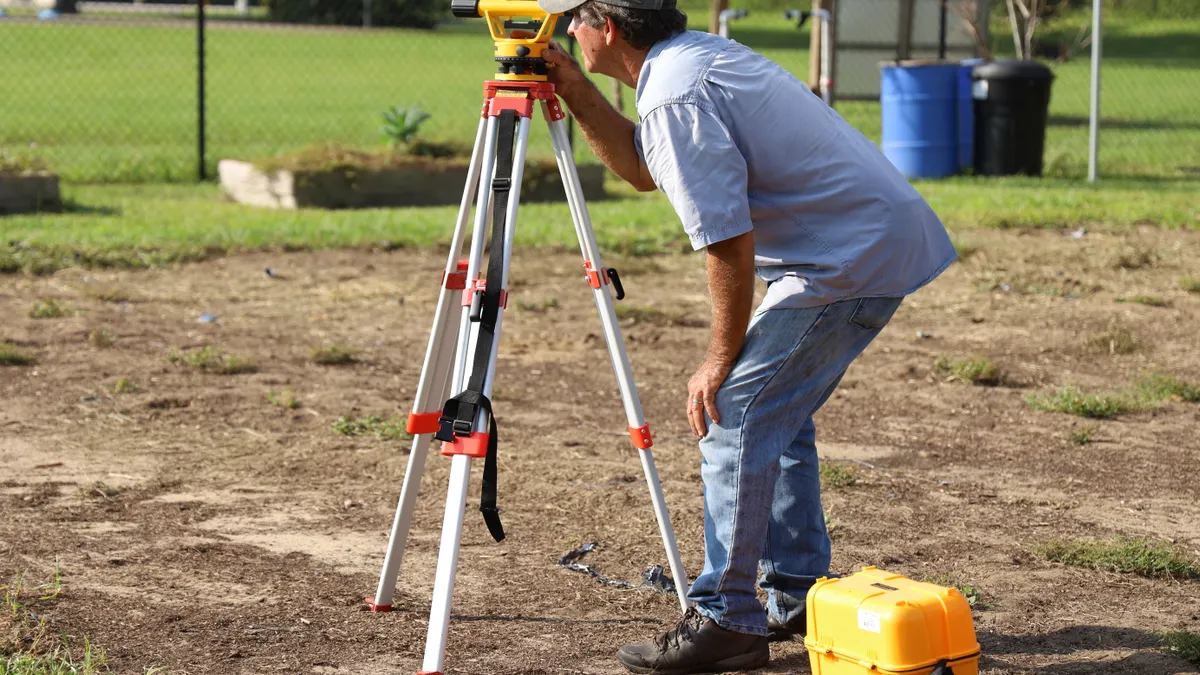
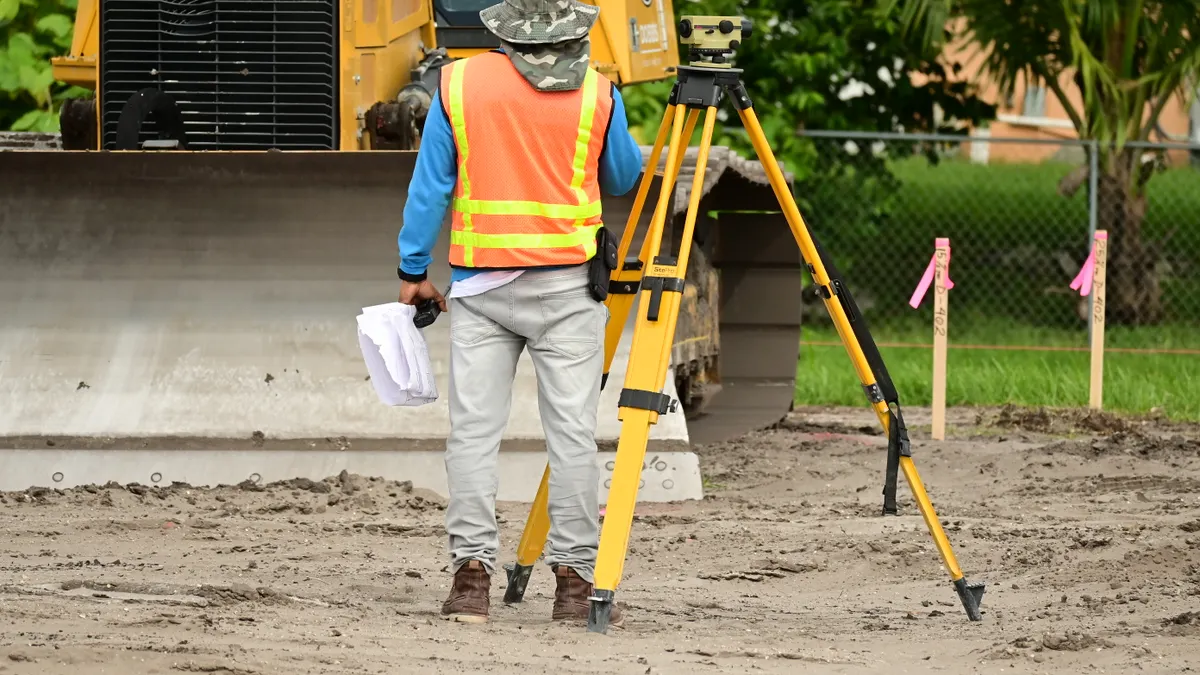
A string line, line level, laser level, or even a straight board with a torpedo level can tell you whether water has a usable path. Measure from the house foundation outward at several points: center of wall, corners, and transitions near steps, porches, or garage slabs. Do not trust one measurement. A yard can have a safe slope in one direction and a reverse slope in another.
Also measure the low point relative to its neighbors. If the middle of the lawn is 2 inches lower than the perimeter over a 10-foot span, you have created a basin. That is a grading problem, not merely a soft spot. If the edge of the lawn is higher than the hardscape, runoff may be trapped before it can exit.
Take note of where water can legally go. A yard that slopes toward a neighbor, a public sidewalk, or a property line may need regrading, a swale, or a subsurface solution that keeps runoff onsite until it can be released correctly. This is where a generic “just add dirt” article goes wrong. Raising one area can redirect water into the wrong place, and that can create both neighbor conflict and foundation risk.
If the house has a basement or crawlspace, the measurement that matters most is the relationship between soil and sill plate, window wells, vents, and the top of foundation wall. Even a small grade error near the structure can move water into places that are expensive to dry out.
The honest side-by-side: regrading or installing drainage?
Regrading wins when the land shape is wrong; drainage wins when the shape is mostly fine but the water needs a controlled path. That sounds simple, but this is where homeowners often choose the wrong fix and pay twice.
| Criteria | Regrading | Drainage system | Winner for this condition |
|---|---|---|---|
| Fixes the root cause | Yes, if the problem is slope or a basin | Yes, if the problem is moving excess water away | Regrading for bad surface shape |
| Works without an outlet | No, water still needs somewhere to go | Sometimes, if it stores or disperses water onsite | Drainage system for tight lots |
| Risk to the foundation | Can improve it or worsen it if done poorly | Can relieve it if discharge is correct | Drainage system near structures |
| Visible change to the yard | High; the surface profile changes | Low to moderate; much is buried | Regrading for persistent puddles |
| Best for roof runoff | Only if the surface can carry it away | Yes; downspouts often need piping or capture | Drainage system for concentrated discharge |
| Soil movement required | Moderate to high | Low to moderate | Drainage system for mature landscapes |
| Chance of future maintenance | Low if grade is correct and stable | Higher; outlets, basins, and pipes can clog | Regrading for low-maintenance goals |
| Cost uncertainty | Can rise quickly if many cubic yards are needed | Can rise quickly if trenching is difficult | Depends on access and depth |
| Good for small, localized puddles | Yes, if the depression is shallow | Yes, if the water must be intercepted | Depends on outlet path |
| Good for whole-yard wetness | Only if the whole site is out of plane | Often, when runoff is the main issue | Drainage system for broad wet zones |
The table points to the real decision: choose regrading when the land itself is wrong, and choose drainage when the land is basically workable but the water needs collection, redirection, or discharge. Regrading is the cleaner answer for a shallow basin, a reverse pitch toward the house, or a lawn that holds water because the finish grade settled. Drainage wins when you have roof runoff, a springy soil seam, a tight side yard, or a site that cannot be reshaped without creating a new problem.
The drawback of regrading is volume. Even a small slope correction can mean moving a lot of soil, and that often requires reestablishing turf, edging, mulch, and sometimes irrigation heads. The drawback of drainage is dependence on maintenance and an acceptable outlet. A French drain, basin, or pipe does not solve a bad grade by itself; it merely gives water a route.
A generic article often treats these as interchangeable. They are not. If the yard is already low relative to the house, adding drain pipe without fixing grade can leave water sitting against the structure. If the yard is only slightly irregular but the downspout is dumping 300 square feet of roof runoff into one corner, moving dirt alone will not stop the issue.
Regrading: who should actually choose it?
Regrading wins for homeowners whose main problem is a wrong surface shape, not a lack of plumbing. If the yard has a shallow bowl, a reverse slope toward the house, or a broad area that stays wet because the finish grade settled after construction, regrading is the most direct fix.
The strength of regrading is that it attacks the geometry. Water can only flow where gravity permits, so correcting the slope changes the entire drainage behavior of the area. A properly graded lawn can carry water to a swale, curb cut, or other lawful outlet without hidden machinery. That usually means less to clog later.
The weakness is that regrading is intrusive. It can disturb turf, shrubs, edging, patios, irrigation lines, and buried utilities. On a narrow side yard, even a small grade correction can push soil against siding or fence posts if the work is done carelessly. On clay soil, reshaping the top layer without addressing compaction below can leave the same wetness problem in a new location.
Regrading is best for:
- A shallow basin in an open lawn
- Soil settled near a newly built home
- A yard where water spreads slowly but has no clear path out
- Properties where the desired solution is visible, simple, and low-maintenance
- Cases where the grade near the foundation can be corrected without creating a reverse slope
Regrading is not the right first move if the issue is coming from a downspout, a neighbor’s discharge, or a site with no legal place for surface runoff to leave. It is also a poor choice where the lot is tightly constrained and any reshaping could move water toward a basement wall or adjacent property.
Drainage systems: when a pipe or drain is the better answer
Drainage systems win when water is arriving in a concentrated way or when the surface cannot be reshaped enough to solve the issue. That includes downspouts, driveway edges, patio transitions, and side yards where a surface swale cannot be built with enough fall.
A drainage system can mean a catch basin, perforated pipe, solid pipe to daylight, trench drain, or French drain depending on what the site needs. A solid pipe is useful when you want to move roof water away fast. A perforated system helps when you want to intercept subsurface water along a wet strip. A surface drain is useful where water enters from hardscape faster than the lawn can absorb it.
The strength here is control. A drain lets you collect water at a known point and route it to a known discharge. That is powerful on lots with limited room to regrade. It is also the better choice near patios, garage slabs, and other hard surfaces where water cannot simply be told to “flow away.”
The weakness is that drainage systems can fail quietly. A buried pipe can clog with sediment. A catch basin can fill with leaves. A French drain can lose performance if the outlet is blocked or the gravel envelope is installed poorly. A homeowner who wants “install it and forget it” should think carefully before choosing a buried system with no easy access points.
Drainage systems are best for:
- Downspout runoff that concentrates in one spot
- Side yards too narrow for meaningful regrading
- Soil conditions that stay saturated even when slope is acceptable
- Areas with hardscape where surface runoff needs capture
- Sites with an obvious outlet, such as daylight, a storm connection where legal, or a managed dispersal area
Drainage systems are not the right answer if the lot itself is pitched toward the house. In that case, the pipe may move some water, but the surface still delivers water to the structure. That is a partial fix, not a diagnosis.
For readers who want standards-oriented background on runoff and site drainage, the American Society of Landscape Architects and local building departments often discuss drainage as part of site planning, but the practical test remains the same: does the system have a reliable path from intake to outlet, and does that path stay clear?
What the generic advice gets wrong about wet yards
The generic advice gets wrong the assumption that “wet yard” equals “needs drainage.” Sometimes the yard needs drainage, but often it needs a different grade, a better downspout discharge, or a compacted area opened up before any pipe is added.
The other common mistake is starting with the symptom instead of the source. If the wet patch is below a gutter elbow, the lawn is not the source. If the low spot appears after new fill settled near a foundation, the issue is not simply “bad soil.” It is an elevation problem created by construction or settling.
A third mistake is ignoring hardscape. Concrete edges, pavers, steps, and retaining walls can all trap or redirect water. Homeowners often spend time on the lawn while the driveway apron or patio edge is acting like the real dam. That is why a good diagnosis walks the site from roof edge to low point, not just across the grass.
A fourth mistake is overcorrecting. Adding too much fill can create a crown that sheds water into a neighbor’s yard or toward a garage. Installing a French drain without checking the outlet can create a buried bathtub. Replacing one problem with another is not a fix.
The most useful mental shift is this: the lawn is a map, not the mechanism. The water problem is written into slope, edges, discharge points, and soil conditions. Once those are read correctly, the fix becomes much clearer.
What if the problem is not the yard at all?
The problem is sometimes the roof, foundation, or site boundary, not the lawn. If water shows up in the yard after every roof discharge, the downspout system is part of the diagnosis. If the basement wall dampens after rain, the perimeter drainage and surface grade near the foundation need inspection before the turf does. If the wet area sits along a property edge, the runoff may be coming from uphill land outside your lot.
This is where simple yard fixes stop being enough. A yard that receives water from an uphill neighbor may need a swale, berm, or legal conveyance strategy rather than just reshaping the lawn. A yard with a foundation problem may need exterior waterproofing, gutter correction, or professional drainage design. A septic area should never be treated casually; standing water there can point to system issues that a specialist should evaluate.
If you see water at a foundation crack, around a basement window well, or near a crawlspace vent, do not treat that like a turf problem. That is a building-envelope problem with drainage consequences, and a professional should inspect it. The same is true if the ground moves, cracks, or sinks near a retaining wall or slab edge. Those conditions can signal structural or soil-stability issues, not just poor grading.
When in doubt, separate the site into three zones: roof water, surface water, and subsurface water. The right fix depends on which zone is failing.
What should you do first, and when should you call a pro?
Start with a rain-day inspection, a slope check, and a downspout audit. Those three steps solve more mystery than any guesswork. If you can see where water enters, where it slows, and where it exits, you can usually tell whether grading, drainage, or both are needed.
A practical order of operations is:
- Watch water during rain or immediately after.
- Check every downspout and hard edge.
- Measure the slope away from the house and across the low area.
- Probe the soil for compaction or a perched wet layer.
- Look for an outlet, basin, swale, or legal discharge path.
- Decide whether the fix is reshaping, collecting, or both.
Call a licensed drainage contractor, landscaper with grading experience, or civil engineer when the issue affects a foundation, retaining wall, septic field, or neighboring property; when the lot has no obvious outlet; or when the fix would require major recontouring. Local code can control where runoff may go, and that is not a place for improvisation.
The verdict: which fix should you choose?
Choose regrading if the ground itself is wrong, the wet area is caused by a shallow basin or reverse slope, and you can correct the fall without creating a new drainage problem. Choose a drainage system if the water is concentrated, the lot is too tight to reshape, or you need to move roof or hardscape runoff to a controlled outlet. Neither if water is reaching a foundation, retaining wall, septic area, or neighboring property and you have not confirmed the cause with measurements.
The best diagnosis is the one that names the source, not just the symptom. If you get that part right, the fix usually becomes smaller, cheaper, and far less frustrating than the first thing you were tempted to try.
Drafted with AI; not yet reviewed by a person.