Last updated: September 10, 2026
Key Takeaways
- A French drain wins when the trouble starts under the soil surface.
- What matters most is this: a French drain works below grade, where the problem usually begins.
- That is why French drains show up so often in basement-waterproofing and perimeter drainage work.
- A French drain that ends nowhere is just an expensive trench.
Table of Contents
- Quick Answer
- The real difference: one drains below grade, the other shapes water above grade
- French drain: who should actually use it, and who shouldn’t?
- Dry creek bed: the specific situations where it wins
- French drain vs dry creek bed for yard drainage: the honest side-by-side
- Which one costs less pain later?
- When the answer flips: exception scenarios you should not ignore
- So which should you choose?
- What should I choose if my basement wall is damp?
- Can a dry creek bed replace a French drain?
- Do I need both?
- What is the biggest mistake homeowners make?
Quick Answer
For french drain vs dry creek bed yard drainage, the quick answer is simple: pick a French drain for hidden subsurface water and a dry creek bed for visible surface runoff. In a typical yard, the wrong move is building the right system for the wrong water path. A French drain often uses perforated pipe, gravel, and fabric, and many installs target a slope of about 1% or more. A dry creek bed is a shaped rock channel for runoff you can actually see.
If your yard stays soggy after rain, the usual call is a French drain for hidden, persistent groundwater problems and a dry creek bed for surface water you want to move and see. I write on french drain vs dry creek bed yard drainage, so I’ll say it plainly: match the system to the route the water is taking. Not the one that looks nicer on paper.
Both systems can solve “water in the wrong place.” They just do it in different ways. One is buried pipe-and-gravel meant to intercept subsurface water; the other is a shaped rock channel that guides runoff across the yard and helps protect low spots from erosion. Pick the wrong one, and you end up paying for a finished-looking fix that misses the actual damage. For a full overview of drainage layouts, see yard drainage solutions and how to grade a yard for drainage.
The real difference: one drains below grade, the other shapes water above grade
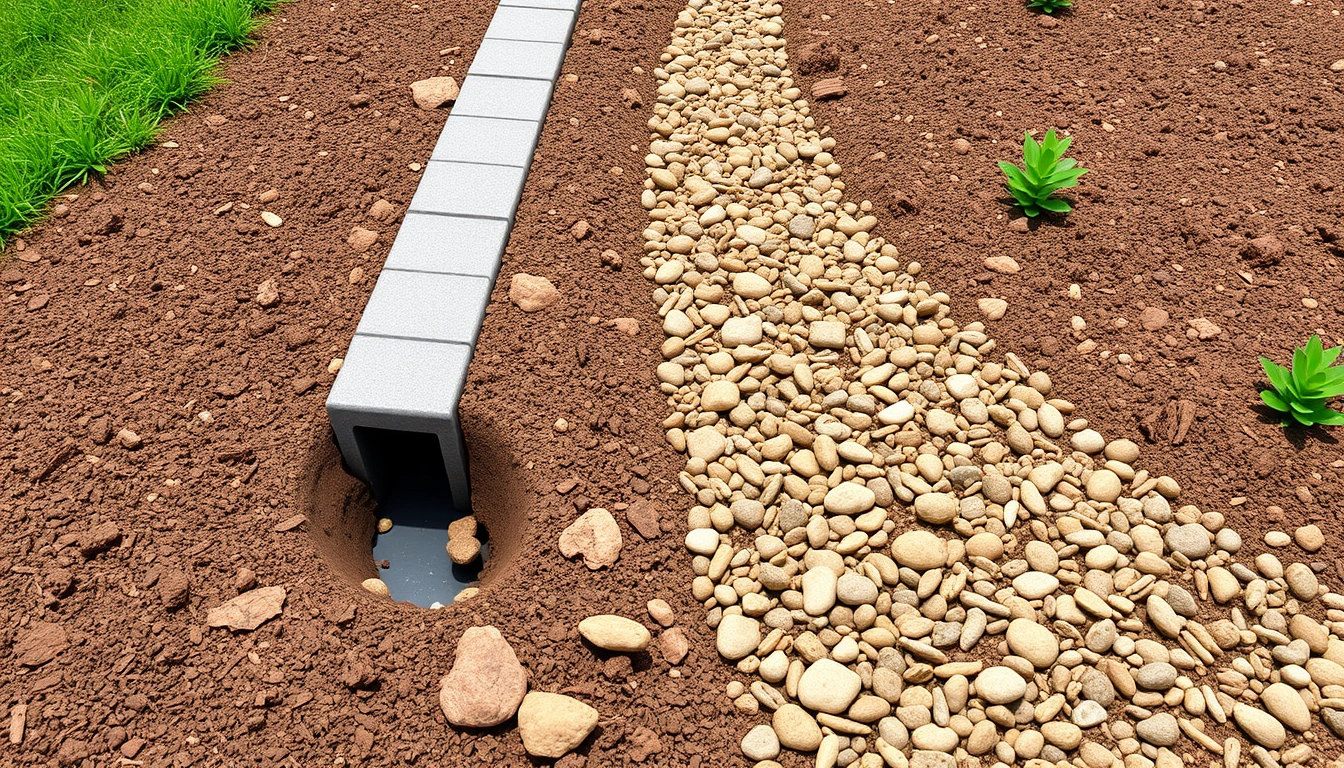
Below the soil surface, a French drain usually wins. Above it, a dry creek bed does. That split matters more than style, cost, or whether you like the look.
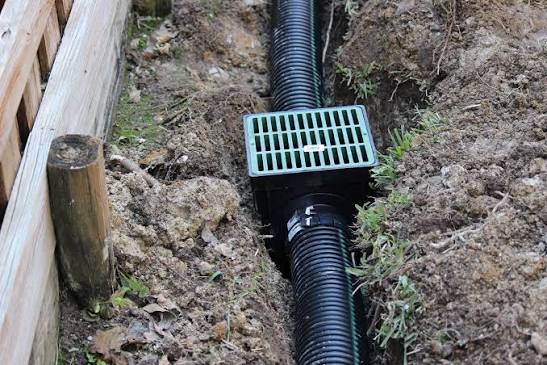
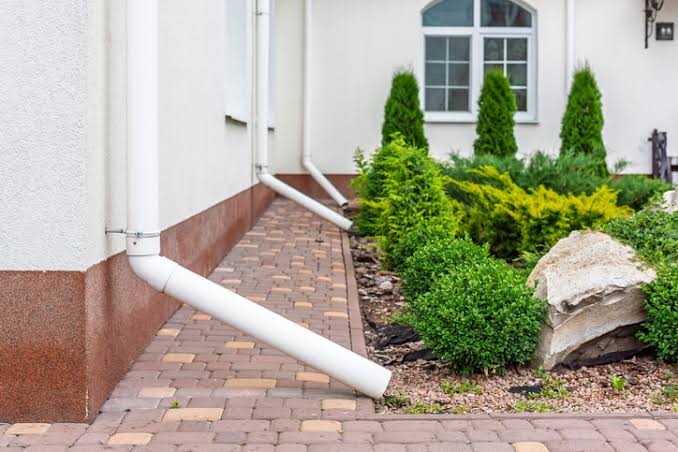
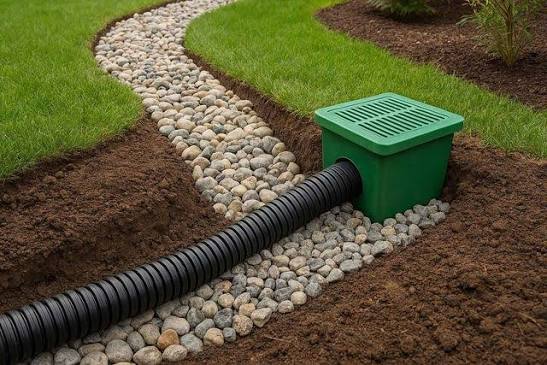
A French drain often means a perforated pipe surrounded by gravel and fabric, buried below grade and commonly set to a slope of about 1% or more so gravity can do the work. It is built to catch water before it pools against a foundation, saturates a lawn, or backs up beside a retaining wall. A dry creek bed, by contrast, is a shallow landscaped channel lined with stone and shaped to carry runoff from one spot to another. You often see it where a gutter downspout, driveway edge, or hillside spillway sends water across the yard.
And that is where people trip up. They treat these as swap-in alternatives. They are not. A qualified drainage contractor can confirm the right fit for the site, but the underlying question is simpler than most folks make it: are you dealing with subsurface saturation or visible runoff? If water is seeping up through the lawn after days of rain, a rock trench on top can look neat and still do almost nothing. If water is sheet-flowing across a slope after a storm, a buried drain may be more machine than you need. That math stops working fast.
The other difference is what each one asks of the yard. A French drain is more surgical and stays out of sight, yet it is less forgiving of bad slope and weak outlet planning. A dry creek bed is easier to read and easier to maintain, but it uses visible space and changes the yard whether you want that or not. Gravity quietly rules both setups. No outlet, no long-term fix.
French drain: who should actually use it, and who shouldn’t?
Persistent wet soil? A damp basement edge? Water collecting along the same line every storm? That is the French drain zone. It is the better choice when the goal is to intercept water before it reaches a structure or turns turf into mud.
Because it works below the surface, a French drain can catch flow long before you see a puddle. Around foundations, window wells, or uphill sides of a house, water can move through soil without much warning. A buried drain can gather that flow and send it to a safe outlet, sump, daylight drain, or approved discharge point. That is why French drains are common in basement-waterproofing and perimeter drainage work. They are not decorative. They are functional. For practical installation guidance, see the U.S. EPA’s Soak Up the Rain and the University of Minnesota Extension.
But there is a catch. The system depends on correct grading, clean materials, and a real outlet. A French drain that ends nowhere is just an expensive trench. If the pipe is laid flat, clogged with silt, or installed without the right fabric and gravel, it can fail quietly. Clay soils with very low permeability can also make it a poor fit when the issue is broad saturation rather than a narrow flow path. In those yards, the drain may catch some water and still leave the surrounding ground soaked. Chalk one up for the ground winning the staring contest.
A French drain is also the wrong answer if the issue is mainly aesthetic or seasonal surface runoff from a slope you want to turn into a landscape feature. It may solve the hydraulics, but it does nothing for curb appeal. If you want the drainage to disappear, this is the right tool. If you want it to become part of the garden, usually not.
Honestly, I’d steer a French drain toward the owner of a house with a wet basement edge, a low side yard that stays spongy after rain, or a walkway that keeps softening near the footing. I would not send it to someone who mainly needs a visible channel for roof runoff across open ground. That person is usually better served by a dry creek bed.
Dry creek bed: the specific situations where it wins
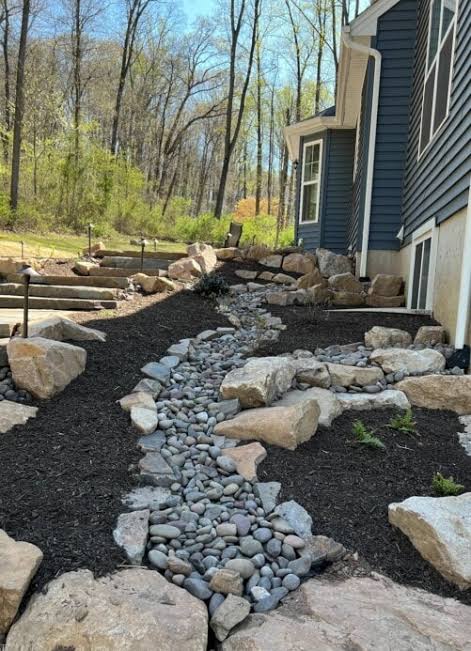
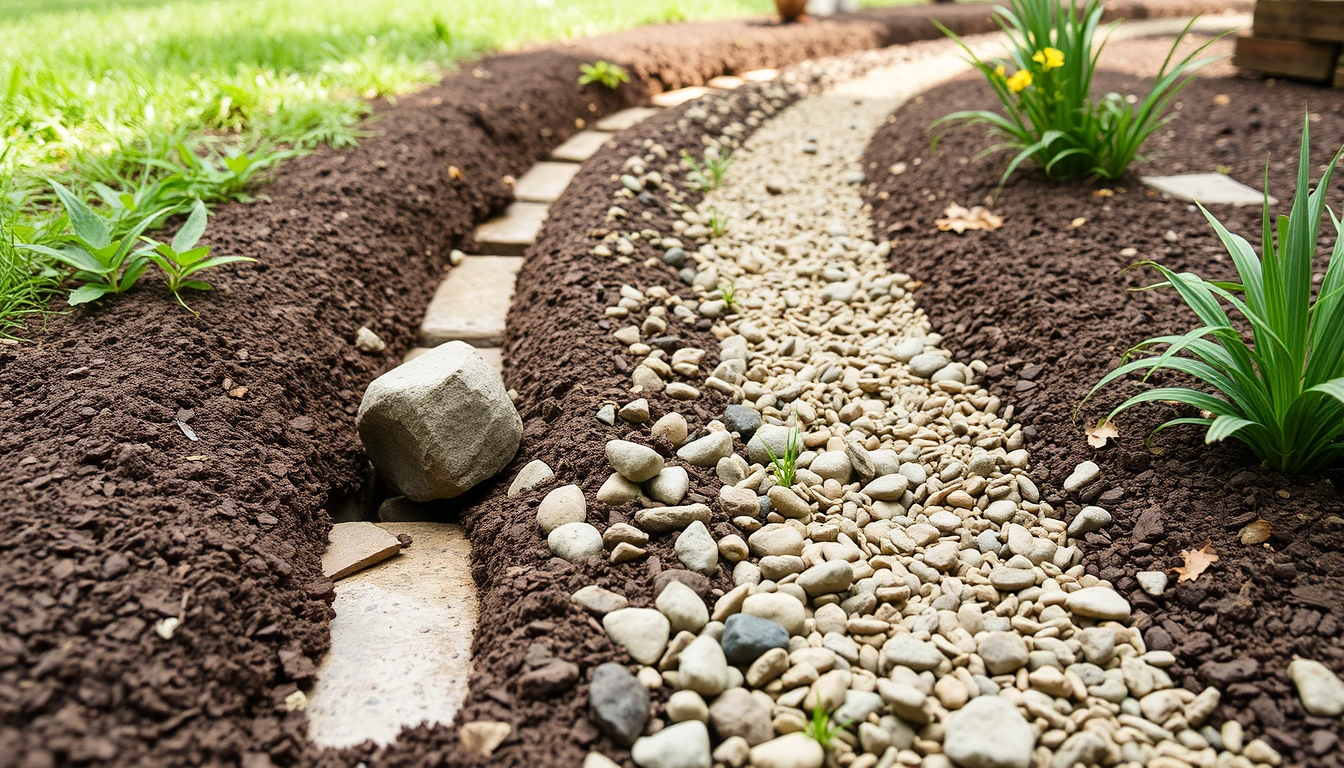
A dry creek bed wins when the problem is runoff you can already see and want to manage without burying everything. It is the better choice for surface water moving off a slope, around planting beds, or away from a downspout discharge point where erosion is the main headache.
The upside is straightforward: a dry creek bed can guide water and carry the visual load of the drainage path at the same time. Instead of a trench hidden under soil, you get a shaped channel with stone, boulders, and transitions that can look intentional. That matters in front yards, side yards, and garden spaces where a visible line would feel like a repair patch. It is also handy where you need a broad, forgiving route for water to slow down, spread out, and pass without carving gullies through mulch.
Maintenance is easier to understand because the flow path is out in the open. If water is overtopping a section or pushing stones downhill, you can see it right away. Still, it is not magic. If the bed is too shallow, too straight, or not tied to a sensible outlet, it becomes a decorative ditch. In a very flat yard, it may not have enough fall to move water well. In a yard with fine sediment, the stones can clog with silt and trap debris.
So, a dry creek bed is also the wrong choice when the actual issue is water under the turf or near a foundation. A surface channel does not relieve hydrostatic pressure against a wall or stop seepage through the soil. If the ground itself is the problem, the creek bed may make the yard prettier while leaving the real moisture issue untouched.
I would choose a dry creek bed for a homeowner whose main issue is roof runoff, hillside sheet flow, or erosion through a landscaped area. I would not choose it for someone with a damp crawlspace or a yard that stays saturated even when no surface flow is obvious.
French drain vs dry creek bed for yard drainage: the honest side-by-side
A French drain wins for subsurface control; a dry creek bed wins for visible runoff management and landscape value. Here is the comparison that actually changes the decision.
| Criteria | French Drain | Dry Creek Bed | Winner for [condition] |
|---|---|---|---|
| Water type handled | Subsurface seepage and hidden saturation | Surface runoff and sheet flow | French drain for wet soil |
| Visibility | Hidden underground | Fully visible landscape feature | Dry creek bed for aesthetic integration |
| Typical install complexity | Higher: trench, pipe, fabric, outlet | Moderate: grading, stone placement, erosion control | Dry creek bed for simpler DIY scope |
| Dependence on outlet | Very high | High, but usually easier to route | French drain for foundation protection |
| Maintenance | Lower visibility, harder to inspect | Easier to inspect, weed, and regrade | Dry creek bed for easy upkeep |
| Failure mode | Clogging or poor slope can hide for a long time | Stone displacement or silt buildup shows up fast | Dry creek bed for detectability |
| Best near foundations | Yes, when properly designed | No, not as primary protection | French drain for foundation-adjacent water |
| Best in planting beds | Sometimes, if hidden drainage is needed | Yes, when part of the design | Dry creek bed for garden spaces |
| Works as a landscape feature | No | Yes | Dry creek bed for curb appeal |
| Handles clay-heavy yards | Sometimes, but not always enough | Better for moving surface water over clay | Dry creek bed for clay runoff |
The table points to the core truth: a French drain is a drainage system first and a landscape element never. A dry creek bed is a landscape feature that can drain well if it is designed well. That is why so many generic comparisons go sideways. They praise one for being “more functional” without saying functional for what.
My rule is straightforward: if the water comes from below, vanishes into the turf, or threatens a structure, the buried system is the serious answer. If the water arrives as a visible stream after storms and you want to move it while improving the yard’s look, the creek bed is the better fit. Neither is automatically superior. The wrong one is just the one built for the wrong water path.
Which one costs less pain later?
A dry creek bed usually wins on lower regret. Not because it is always cheaper — usually, it is not that simple — but because the problem is easier to inspect and adjust. A French drain wins when a failed surface solution would be expensive to revisit. That is the trade-off.
The hidden cost of a French drain is diagnosis. Misread the problem, and you can spend money burying pipe where the real fix was surface grading, downspout extension, or a swale. Because the drain disappears, mistakes disappear with it until the yard stays wet. Planning matters more than labor. So does the outlet.
The hidden cost of a dry creek bed is land use. It takes visible space and reshapes the yard. If the channel cuts across a main path, play area, or mowing lane, it becomes a permanent design constraint. It may also need periodic stone resets after a hard storm. Not a deal-breaker. Just real.
In practice, I think of the French drain as the better choice when failure would affect a house, not just a lawn. I think of the dry creek bed as the better choice when the yard needs a visible, flexible path for stormwater and you can spare the space. One is a utility. The other is a utility with landscaping benefits attached.
When the answer flips: exception scenarios you should not ignore
A dry creek bed can beat a French drain when you need to manage downspout discharge across an open yard and the water is mostly surface flow. In that case, a buried drain is often more effort than the problem deserves.
A French drain can beat a dry creek bed when the issue is water near a foundation, crawlspace, or basement wall. Surface stone does not relieve pressure in the soil, and that is the whole point of subsurface drainage.
A neither-or-both answer is right when the yard has no reliable outlet. If water has nowhere to go, the fix may start with regrading, a swale, or changing where roof runoff lands. A French drain or dry creek bed without an exit is just a prettier way to store water.
A dry creek bed can also be the better call when the yard has erodible slopes and a need for visual structure. In a planted setting, a designed stone channel can protect soil better than a buried line that does nothing to shape the runoff path above it.
The flip side: if the yard is flat and soggy, and you are hoping stones alone will magically make water disappear, I would reject the creek bed. In flat ground, appearance can hide the absence of real drainage.
So which should you choose?
Choose a French drain if the problem is hidden saturation, foundation-adjacent moisture, or a low area that stays wet after rain. Choose a dry creek bed if the problem is visible runoff, erosion, or downspout water that needs a handsome path through the yard. Choose neither if slope and outlet are still unsolved, because no drainage feature can outrun bad grade.
That is the call I would make. A French drain is the right tool for invisible water. A dry creek bed is the right tool for visible water. Mix them up, and you may still be looking at a wet yard after the stone is in place.
What should I choose if my basement wall is damp?
Choose a French drain if the dampness is tied to soil against the wall or water pooling along the footing. A dry creek bed may improve surface runoff, but it does not address water pressure below grade.
Can a dry creek bed replace a French drain?
No, not for foundation drainage or persistent subsurface seepage. A dry creek bed can help with runoff and erosion, but it is not a substitute for a buried drainage system where water is moving under the soil.
Do I need both?
Sometimes, yes. A common setup is a French drain near the house and a dry creek bed farther out to carry roof or slope runoff through the yard. That combination makes sense when the site has both hidden seepage and visible stormwater. For related planning, see foundation drainage basics and downspout drainage options.
What is the biggest mistake homeowners make?
They choose based on appearance instead of water path. If the problem is below grade, bury the solution. If the problem is surface runoff, shape the surface first.