Last updated: September 10, 2026
Key Takeaways
- Set a string line and measure fall with a 4-foot level or a line level over 10 feet.
- The pipe is often 4 inches in diameter; that size is common because it is easy to source and handle, not because it is magical.
- After a normal rain, note whether the water disappears from the surface within 24 hours but the yard still feels spongy for 2 to 3 days.
- If the area is basically flat, changing grade by even 1 to 2 inches over several feet can make a real difference.
Table of Contents

- Who this applies to — and what you need to know first
- Which yard drainage fix is right for clay soil?
- How do I tell whether I need a French drain or just better grading?
- The right drainage fix depends on where the water comes from
- How do I install the right fix step by step?
- What are the mistakes people make with clay-soil drainage?
- When should I stop and choose a different fix?
Clay soil usually needs one of three drainage fixes: regrading, a shallow surface drain, or a subsurface French drain. Pick wrong, and the puddle just migrates a few feet away. Not exactly progress. The right choice depends on where the water sits, how far it has to travel, and whether you are solving runoff from the yard or seepage from the soil itself. In practice, slope, outlet, and where water collects after a typical 24-hour rain event usually settle the question of which yard drainage fix is right for clay soil.
Who this applies to — and what you need to know first
This applies to a yard that stays wet after rain because the ground is dense, slow-draining clay, not because of a burst pipe or a broken downspout. I am assuming you already know the basics of your site: where the low spot is, where water enters, and roughly how long the yard stays soggy after a storm. A notebook, a 25-foot tape measure, a string line, and a 4-foot level are enough to start making a real decision about which yard drainage fix is right for clay soil.
The first choice is not “French drain or not.” It is whether your problem is surface water or groundwater. Surface water is the water you can see moving, pooling, or sheet-flowing after rain. Groundwater is the wet layer below the top few inches that keeps clay soft for days. If the water is on top, a drain that lives underground can be the wrong tool. If the ground itself is saturated, a shallow swale may not do enough.
I would rule out DIY-only work if the water is entering near a foundation, basement wall, crawl space, or retaining wall. Those conditions can involve structural or waterproofing issues, and the wrong drain can send water where it does more damage. I would also avoid digging a long trench if the yard has buried utilities you have not located, if the grade falls toward a neighbor’s lot, or if the wet area is tied to a failed sewer, septic, or spring. In those cases, the drainage fix is not just a landscaping decision.
For ordinary yard pooling on clay, the answer usually comes down to one question: do you need to move water across the surface, carry it in a trench, or change the slope so it leaves on its own? For general yard grading and drainage guidance, the U.S. EPA recommends directing water away from structures and avoiding discharge problems that create runoff elsewhere. See the EPA’s stormwater guidance and local code requirements before you dig. EPA
Which yard drainage fix is right for clay soil?
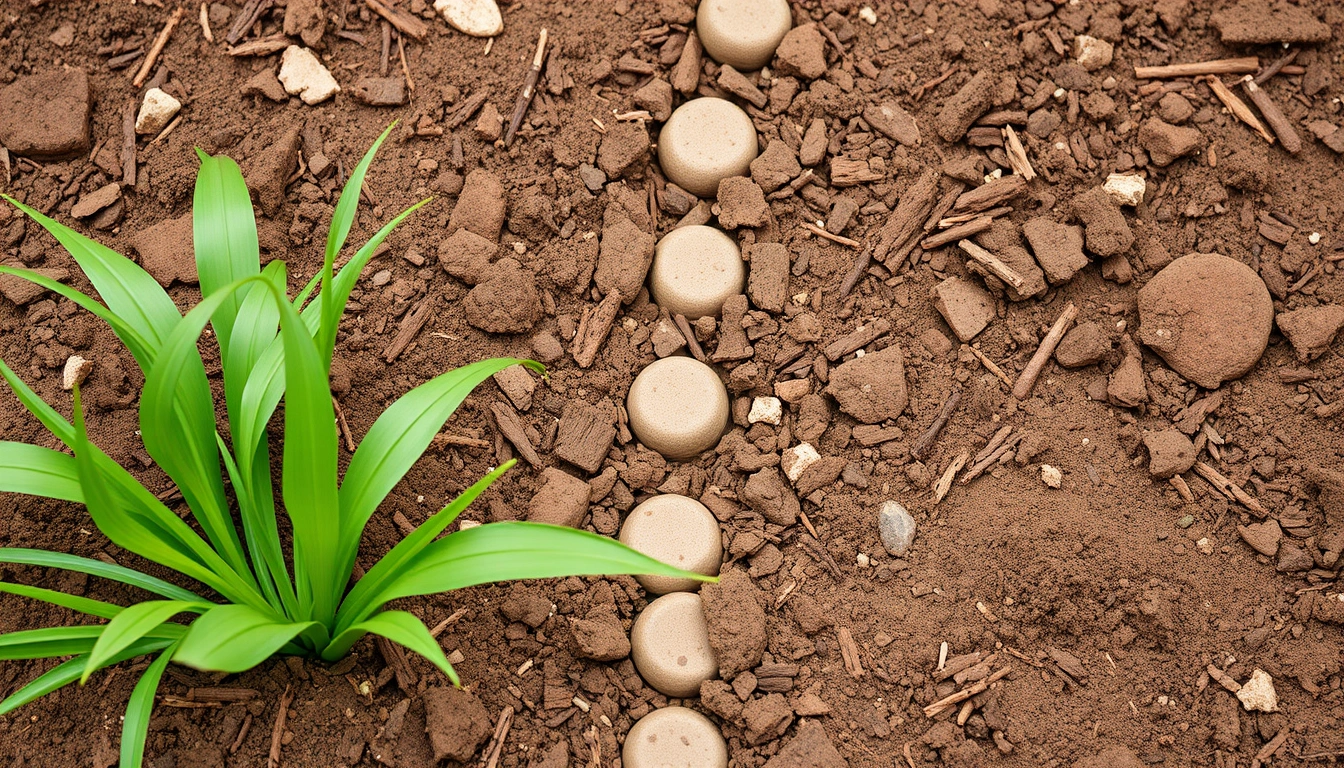
The best fix matches the depth and direction of the problem; the “most permanent” one is not automatically the right one. On clay, I would think in this order: regrade first if the yard simply tilts wrong, a swale or channel drain if water needs a defined path on the surface, and a French drain if water has to be intercepted below the sod line or alongside a wet edge.
Regrading means reshaping the soil so water falls away from the house, patio, or low spot. It is the cleanest answer when the yard is only off by a small amount. A proper slope is usually about 1 inch of fall per foot for the first 6 to 10 feet away from a building, though local code and site conditions can change that. Regrading is not glamorous, but on clay it often solves what looks like a “drainage” problem that is really a grading problem. Too little slope, and the water just lounges there.
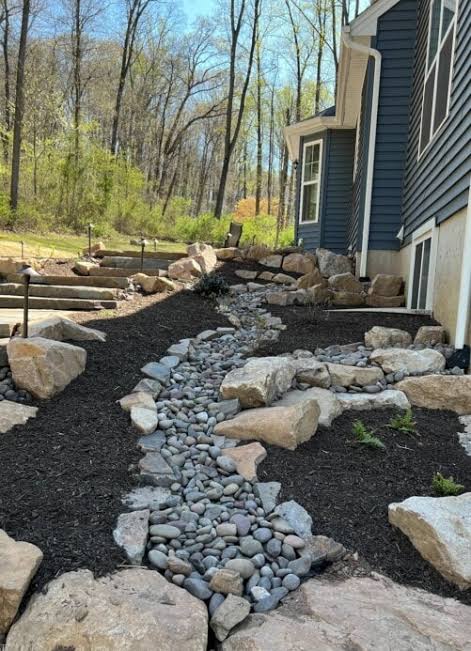
A shallow swale is a shallow, grass-lined ditch that guides runoff. It works when water already moves across the yard but needs a better route than the natural low point. On clay, a swale often beats a buried drain for long, broad problem areas because it handles sheet flow and is less likely to clog. It is wrong where you cannot spare the surface space or where the flow is so concentrated that it cuts channels through turf.
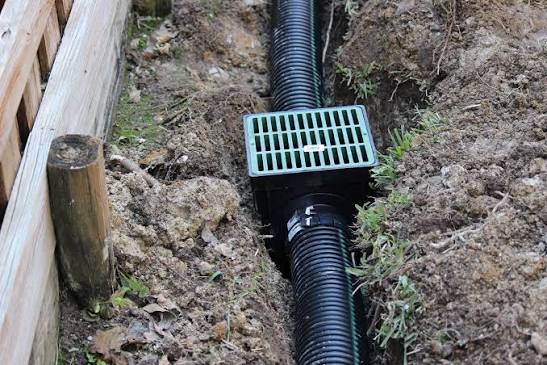
A French drain is a trench filled with gravel, usually with a perforated pipe, meant to collect and move subsurface water. The pipe is often 4 inches in diameter; that size is common because it is easy to source and handle, not because it is magical. A French drain makes sense when clay stays wet below the surface, when water seeps out of a slope, or when you need to intercept runoff before it reaches a patio, lawn edge, or foundation-adjacent area. It is wrong when the only problem is shallow puddling on top of compacted clay; then the pipe may sit there waiting for water that never reaches it.
A channel drain is a surface trench with a grate, often used across driveways, patios, or hardscape edges. It is the right call when water is visibly racing across a hard surface and needs to be caught fast. It is usually overkill for open lawn unless the lawn meets pavement or a slope concentrates runoff at one line.
If I had to reduce it to one sentence: fix the grade if you can, guide the surface if you must, and drain the subsurface only when the clay is holding water below the top layer.
How do I tell whether I need a French drain or just better grading?
You need a French drain when water comes back through the soil, not just across it. That distinction matters on clay because clay often forms a perched wet zone after rain: the top layer seals, water lingers, and the soil stays soft even where there is no obvious stream.
Start with a simple test. After a normal rain, note whether the water disappears from the surface within 24 hours but the yard still feels spongy for 2 to 3 days. If so, you are probably dealing with subsurface saturation, and a French drain may help. If water is still visibly pooled after the rain stops, grading or a surface drain is usually the first move. If the pattern is fuzzy, get a drainage contractor or landscape professional to look before you excavate; the NRCS and extension guidance on clay soils both note that site-specific conditions can change the correct fix. USDA NRCS
I also look at slope. If the area is basically flat, changing grade by even 1 to 2 inches over several feet can make a real difference. If the slope already exists but water still sits at the bottom, that suggests runoff is arriving faster than the soil can absorb it. In that case, you may need a swale, channel drain, or collection point instead of a buried line.
A French drain has a specific job: capture water entering a trench and move it to daylight, a dry well, or another legal discharge point. It is not a cure for every muddy patch, and on clay it works best where the trench can intercept water before it spreads, such as along a slope or beside a strip of turf that stays wet after storms. It is a poor fix for broad lawn areas with no clear path for discharge. A drain without an outlet is just a gravel-filled ditch.
One useful rule: if you can fix the problem with 2 inches of soil moved over 10 feet, do that before excavating a 12-inch-wide trench. Excavation costs time, soil, and the chance to disturb roots or utility lines. A grading correction is often simpler and more forgiving.
The right drainage fix depends on where the water comes from
The source of the water usually decides the fix, and this is where generic advice goes wrong. A lot of articles treat all puddles as the same, but they are not; if the source is unclear, consult a professional and check local extension or municipal drainage guidance before you commit to a trench.
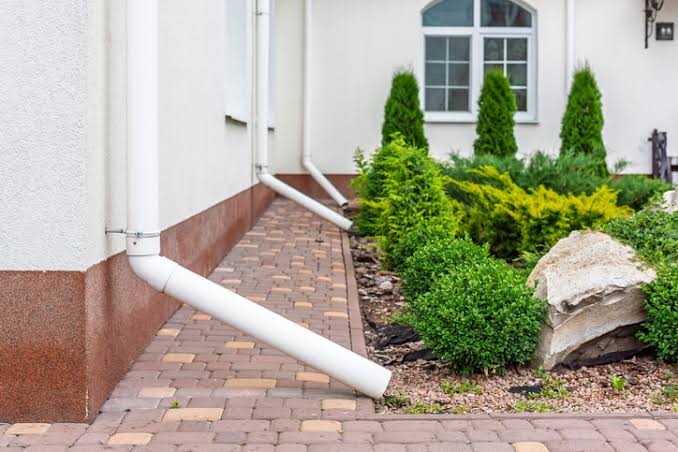
If water comes from roof runoff, the first fix is usually to extend downspouts at least several feet away from the foundation and out of the problem zone. I would not bury a French drain to compensate for a downspout dumping at the wall. That is solving the symptom, not the cause. On many sites, adding a 6- to 10-foot extension is cheaper and more effective than excavating a trench.
If water comes from a neighbor’s slope, a swale or intercept trench on your side can catch it before it crosses the yard. The key is to give that water a path with enough fall. A line that moves only a fraction of an inch per foot can clog with silt or sit full of water for long periods.
If water rises from a low pocket in the yard after rain and stays there even with no visible inflow, clay is likely the culprit. A French drain may help if the pocket has an outlet lower than the collection area. If it does not, you may need a dry well, a rain garden, or a raised bed strategy instead. Clay does not absorb water quickly enough to make a soakaway work everywhere, and that is a common failure. The EPA’s landscaping and stormwater materials, plus university extension resources, both stress matching the storage or discharge method to the site’s infiltration rate. EPA
If the wet area is near a patio, driveway, or walkway, a channel drain often makes more sense than a French drain. Hardscape does not tolerate standing water well, and a grate captures sheet flow before it reaches the slab edge. A French drain hidden under the lawn may never intercept that water soon enough.
Honestly, the trade-off is simple: surface fixes are easier to maintain and easier to inspect; buried fixes are less visible but more sensitive to poor slope, clogged fabric, and bad outlet choices. Clay soil makes both harder because it sheds fine particles and moves water slowly.
How do I install the right fix step by step?
Install it by matching the excavation to the water path, not by copying a generic trench recipe. For clay soil, I would follow this sequence and verify each step before moving on.
- Mark the wet area after a rain. Outline the puddle edge and the soggy fringe with marking paint, then measure the length and width in feet. Verify that the marked area matches the part of the yard that stays wet for at least 24 hours. If the wet zone shifts every storm, the problem is probably runoff pattern, not a fixed low point.
- Establish the existing slope. Set a string line and measure fall with a 4-foot level or a line level over 10 feet. For regrading, look for about 1 inch per foot away from structures in the first several feet. If the slope is flatter than that, water will linger; if it already falls correctly, grading alone may not solve the issue.
- Confirm the outlet. Decide where water will end up: daylight, a storm connection where allowed, a dry well, or a lower safe discharge point. Measure the distance and total fall. If you cannot maintain usable downhill flow, a French drain will sit full and stop performing.
- Choose the trench line or swale line. Lay out the path along the natural water route, not the shortest path on paper. For a French drain, keep the trench continuous and avoid sudden high spots. For a swale, keep the center shallow enough to mow. If the line crosses the problem instead of intercepting it, water will bypass it.
- Excavate to the right depth. For a French drain, a common working depth is about 12 to 24 inches in a yard application, depending on what you need to intercept. For a swale, remove only enough soil to create gentle shape. Verify that the trench bottom follows the intended fall. A flat bottom in clay often means standing water.
- Use separation correctly. Line the trench with filter fabric that is meant for drainage applications, then add clean angular gravel, not rounded river rock. Verify that the fabric overlaps at the top and that the gravel does not mix heavily with native clay. If clay migrates into the stone, the system will clog faster.
- Set pipe with a consistent slope. If you are installing perforated pipe, keep the perforations oriented per the manufacturer’s instructions and maintain a slight continuous slope toward the outlet. Verify flow with a hose before backfilling. If water ponds in the trench, check for sags immediately; a “belly” in the pipe traps sediment.
- Backfill and finish the surface. Cover the drain with more clean gravel, fold the fabric over, then add topsoil or turf layer as appropriate. For a swale, shape the sides gently and seed or sod it. Verify that the finished surface still directs water the right way after a rainfall. If the finish sits too proud or too low, runoff will jump the line or re-form the low spot.
A good result is simple: the surface dries faster, the soil stops staying slick for days, and water leaves the area without creating a new puddle downstream. If the problem area improves but a new wet patch appears 10 feet away, the system is not wrong so much as incomplete. That is often the moment to revisit which yard drainage fix is right for clay soil rather than assuming the first installation failed.
What are the mistakes people make with clay-soil drainage?
The biggest mistake is installing a drain before fixing grade. On clay, a buried pipe cannot compensate for a yard that slopes toward the house or a patio that traps water at the edge. The consequence is obvious: the water still gathers, only now it does it beside a trench you paid to dig. The alternative is to regrade first, even if the correction is modest.
A second mistake is using the wrong outlet. A French drain that ends nowhere useful becomes a storage trench, not a drain. Water backs up in the pipe, gravel stays saturated, and fine soil moves into the system. The alternative is to plan the discharge before the first shovel hits the ground.
A third mistake is wrapping everything in the wrong fabric or stuffing the trench with clogged, dirty stone. Clay soil is full of fine particles. If those fines wash into the gravel, the void space disappears. The consequence is slower drainage within a season or two. The alternative is clean angular aggregate and a drainage fabric meant to keep fines out.
A fourth mistake is making the trench too shallow in a site that needs interception below the root mat. In clay, water often sits lower than people expect. A trench that is only a few inches deep may catch surface splash but miss the saturated layer. The alternative is to set depth based on where the water actually collects, not on convenience.
A fifth mistake is overbuilding with a channel drain where a swale would do. Channel drains cost more in parts and attention because grates collect leaves and sediment. They are excellent across hardscape; they are not a universal yard fix. The alternative is to use the simplest system that matches the water’s path.
When should I stop and choose a different fix?
You should stop and choose a different fix when the yard tells you the first answer is wrong.
The area stays wet for more than 2 or 3 days after rain: that usually means subsurface saturation in clay, not just surface runoff — switch from a grading-only approach to an intercept drain, swale, or outlet plan.
Water is entering from a roof downspout: the drain is not the first problem — extend and redirect the downspout before you trench the yard.
The low spot is beside a foundation, basement wall, crawl space, or retaining wall: do not treat it as a simple landscape patch — consult a drainage or waterproofing professional, because the fix may need to protect structure as well as turf.
The yard has nowhere to drain by gravity: a French drain may not be the right answer — a dry well, rain garden, or regrade may fit better, depending on soil and code.
The wet area keeps returning after one change: the issue may be more than one source — for example, roof runoff plus clay saturation, or a low spot plus compacted fill.
If you still cannot tell which yard drainage fix is right for clay soil after those checks, get a site-specific opinion before you dig. A few hundred dollars in advice is usually cheaper than redoing a trench, a swale, or a whole yard.