Last updated: September 10, 2026
Key Takeaways
- Mark the standing water line within 24 hours of a storm.
- Measure slope over 10 feet with a level or string line.
- This applies if your yard turns soggy, holds standing water for 1 hour to 24 hours, or leaves muddy patches after rainfall.
- A roof, driveway, patio, or slope can concentrate runoff and create a puddle even outside a floodplain.
When heavy rain leaves a pool in your yard, the reason is usually plain: the ground cannot take in water or move it along fast enough, or the lot is shaped so water settles there. Simple. This guide lays out why water pools in your yard after heavy rain, how to trace the source, and when to call a pro. Sometimes the answer is just poor surface drainage. Sometimes it is compacted soil, a low spot, clogged downspouts, or a grading issue that needs a qualified drainage or building professional. Sudden pooling, severe pooling, or water near the house foundation? Speak to a qualified drainage or building professional about your own situation.
Who this applies to, and what I’m assuming you already know
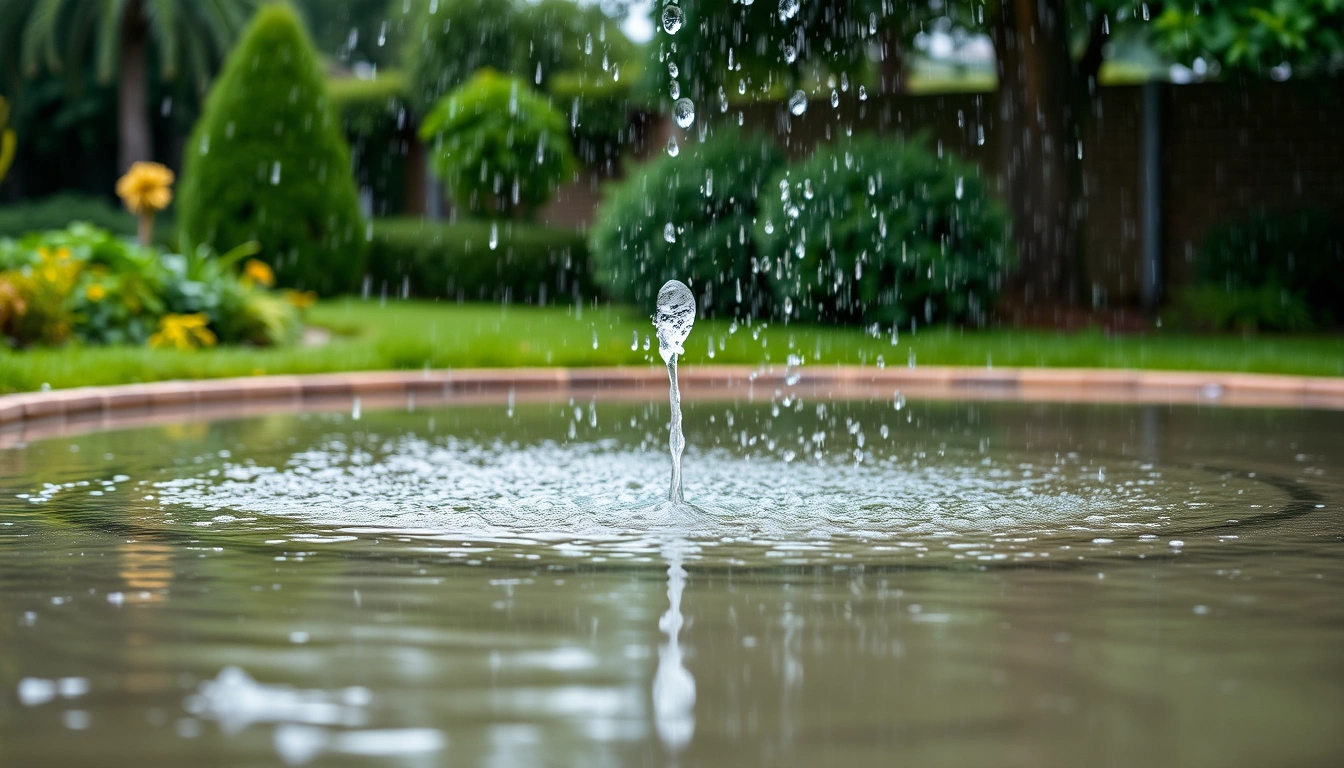
This applies if your yard turns soggy, holds standing water for 1 hour to 24 hours, or leaves muddy patches after rainfall. I’m assuming you already know the difference between a wet lawn and visible puddles, and that you can look over the property after rain without digging up the whole yard. I’m also assuming you can check obvious features such as downspouts, gutters, slope, and where neighboring runoff enters.
Not the same thing as a yard that merely feels soft for a day after a storm. Clay soils can stay damp longer than sandy soils, and a low spot can collect water even if the rest of the yard drains normally. So the real question is not “Is my yard wet?” It is “Why is water staying here instead of moving away?” That answer usually falls into a few buckets: poor grading, soil that drains slowly, blocked drainage paths, runoff from roofs or hard surfaces, or a high groundwater table after heavy rain.
I’m not going to tell you to treat every puddle as a crisis. But I also would not shrug off water sitting close to a house, garage, or basement entry. Persistent pooling can lead to muddy turf, root stress, mosquito habitat, and in some cases water intrusion. If water enters a structure, or the same spot floods every storm, that is the point to get qualified help rather than guessing. For general home-water guidance, the U.S. EPA and FEMA both recommend assessing drainage before damage worsens, and local contractors can help interpret site-specific conditions.
Why water pools in your yard after heavy rain
Water pools because more water is arriving than leaving. Obvious, yes. Still useful.
Poor grading is one cause. That means the ground does not slope away from the house or away from the low point where water collects. Even a gentle dip can turn into a basin after 1 inch or more of rain. If water keeps settling in the same place, grading is often part of the story.
Compacted soil is another. When foot traffic, construction equipment, or repeated wetting and drying squeeze soil particles together, fewer pore spaces remain for water to pass through. Clay soils are especially slow because the particles are tiny and hold water tightly. A lawn can look fine on top and still behave like a saucer underneath.
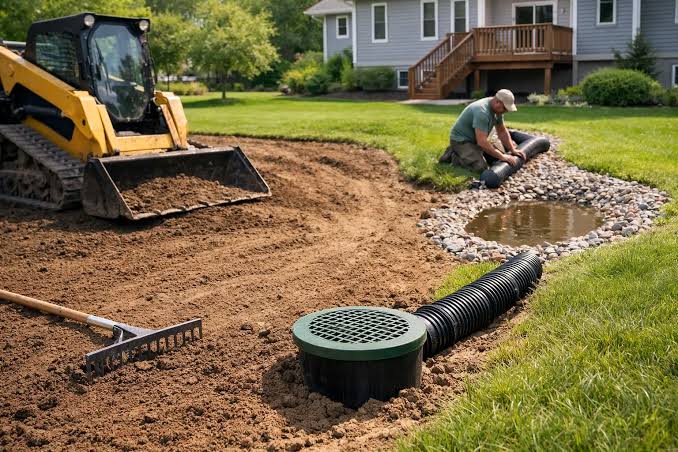
Blocked inflow or outflow paths are a third cause. Roof runoff that should move away may dump at one point through a short downspout extension. A shallow swale, French drain, catch basin, or culvert can clog with silt, leaves, or roots. A swale is a shallow channel shaped to move water across the yard without eroding it. Once it fills with debris, water hits a dead end.
Then there is too much water concentrated in one area. A roof plane, driveway, patio, or slope from a neighbor’s property can send a large volume of runoff to the same low point. A roof, driveway, patio, or slope can concentrate runoff and create a puddle even outside a floodplain.
High groundwater or a perched water table can do it too. Groundwater is the water already in the soil below the surface. After prolonged rain, the water table can rise near the surface and leave the yard saturated from below. In that case, surface fixes may help only a little.
The easy mistake is blaming “bad soil” and stopping there. Soil matters, sure. But the yard’s shape and the amount of water reaching the spot matter just as much. If one downspout causes the puddle, the soil is not the whole story. Not even close.
How I’d trace the cause, step by step
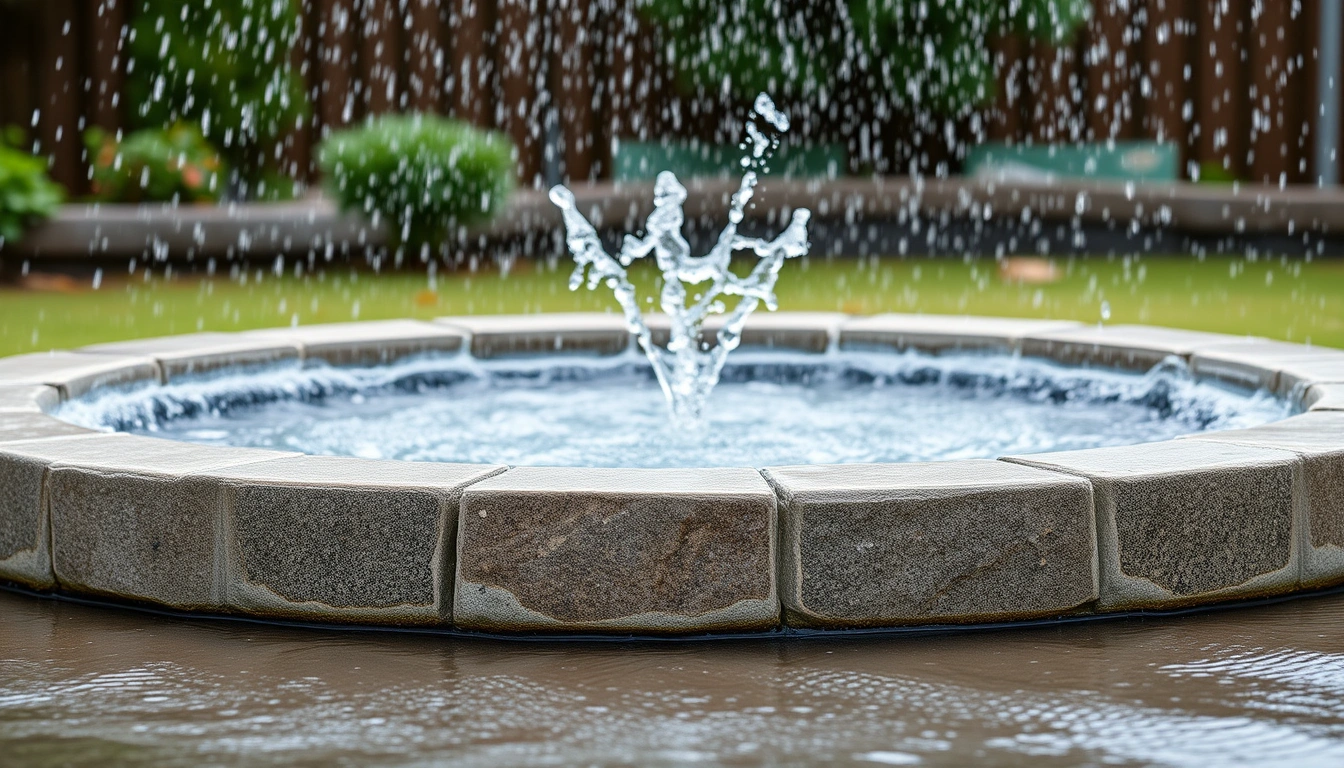
I’d start at the water’s edge and work backward. That shows whether the problem is collection, flow, or absorption. You can do this with a tape measure, a 4-foot level, marking flags, and a notebook.
- Mark the standing water line within 24 hours of a storm. Place flags or stakes at the edge of each puddle and note the date, rainfall amount if you know it, and how long the water remains. Verify whether the same shape appears after 2 different storms. A problem is likely if the puddle returns in the same place each time.
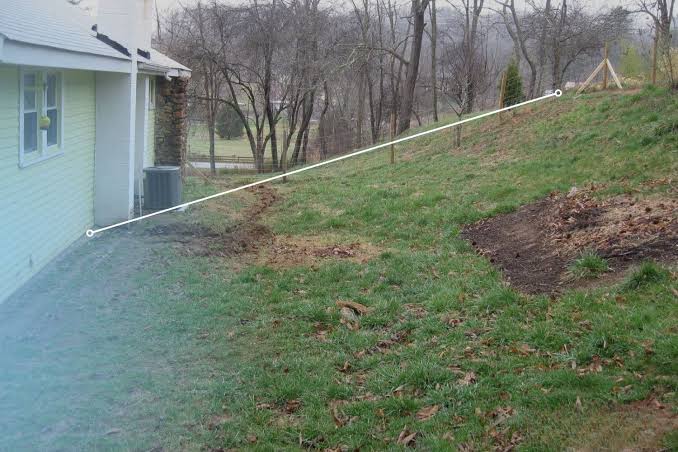
- Measure slope over 10 feet with a level or string line. Put a 4-foot level on a straight board or string and check whether the ground falls away from the house, driveway, and patio. A common target in grading work is a drop of about 6 inches over the first 10 feet away from a foundation, though local conditions vary. A problem is likely if the ground slopes toward the structure or stays nearly flat.
- Check roof runoff at every downspout. Confirm that each downspout discharges at least several feet from the house, not directly into a low spot. Look for splash marks, erosion, or wash lines. A problem is likely if one downspout empties into the exact area that pools.
- Inspect surface flow paths after rain. Watch where water travels from driveway edges, patios, sidewalks, and neighboring lots. Verify whether a swale or shallow channel is actually carrying water, or if it is blocked. A problem is likely if water stalls at a depression or crosses a hard edge and spreads.
- Test the soil’s surface drainage in the puddle area. After the ground has drained for a day, dig a small hole about 6 inches deep and fill it with water once. If water still sits for hours, the soil drains slowly. A problem is likely if the hole remains full or drains far more slowly than surrounding spots. This is not a formal percolation test, but it gives a practical clue.
- Look for compaction and root stress. Walk the area and note hard, bare, or mossy patches, thin turf, and ruts from mowers or vehicles. Verify whether the area sees foot traffic, parked cars, or equipment. A problem is likely if the ground feels dense and the grass struggles only there.
- Check for signs of groundwater or seepage. If water rises from below rather than entering from above, you may see seepage at the soil surface or puddles that appear even without direct runoff. Verify whether nearby slopes, springs, or a high water table could be involved. A problem is likely if the area stays wet long after the rest of the yard dries.
- Compare the problem spot with the rest of the property. Measure whether the issue is isolated to one basin or affects several low points. Verify if the yard has a single outlet, like a curb drain or storm inlet, or no clear outlet at all. A problem is likely if multiple areas collect water and none drains well.
The point of this sequence is not perfection. It is to separate a yard that needs regrading from a yard that needs runoff redirected, soil aeration, drain repair, or professional assessment. If you can identify where the water enters and where it fails to leave, you are already ahead of the generic “improve drainage” advice that skips the diagnosis. That shortcut is a trap.
What the common causes look like in real yards
Poor grading usually shows up as a shallow bowl, especially near the house, at the base of a slope, or where someone filled in a trench without compacting and shaping the soil correctly. The fix is not “more dirt” in the abstract. It is changing the landform so water moves away at a gentle, continuous slope. A yard can look level to the eye and still hold water because the fall is too small to carry runoff.
Compacted soil looks different. The surface may be hard, crusted, or sparse, and puddles may linger even when the surrounding yard drains. This often happens where construction equipment parked for days, where people cut across the same path, or where clay soil has been worked when too wet. In that case, the issue is not just the top inch. The soil profile itself has poor pore space.
A downspout problem is usually obvious once you look. If a roof dump point feeds the wet area, the yard is not “mysteriously bad at draining.” It is taking a concentrated water load. Short extensions, loose elbows, disconnected sections, and buried lines that clog with leaves or silt are common failure points. I’d treat roof runoff as a prime suspect any time the puddle starts within a few feet of the wall, but I would still verify the slope and the discharge point before calling it the only cause.
Neighbor runoff is trickier. If a lot slopes onto yours, the water may be legal, normal, or simply hard to manage, depending on local rules and property layout. The important point is that a shallow swale or drain sized for your own runoff may be overwhelmed by outside water. That math stops working fast.
High groundwater is the case that frustrates people most. If the soil is saturated from below after a long wet spell, surface shaping alone may not solve it. That is where a drainage contractor, civil engineer, or geotechnical professional becomes the right call, especially if the issue is widespread or tied to the foundation.
When to stop guessing and get qualified help
Stop trying to self-diagnose when the problem crosses from nuisance to risk. The reason matters.
Water stands against the foundation for more than a few hours: this can point to a drainage failure near the house — get qualified help before you try bigger fixes.
Water enters a basement, crawl space, or garage: this is no longer a yard-only issue — contact a foundation or drainage professional.
The yard floods every time rainfall exceeds about 1 inch: the site may have a structural grading or outlet problem — a simple surface tweak may be the wrong tool.
You see sinkholes, sudden soft spots, or a ground depression forming quickly: this can indicate erosion, a failed pipe, or unstable fill — stop disturbing the area and get an assessment.
The wet area is large, persistent, and wet from below even in dry weather: high groundwater or seepage may be involved — surface fixes may fail and could waste money.
The problem started after new construction, trenching, or a major landscaping change: fill, compaction, or a broken drain line may be the cause — the right fix depends on what was altered.
This is also where cost and trade-offs matter. A homeowner can often clear a downspout, extend a discharge line, or re-shape a small depression. But if the solution needs excavation, permits, or tie-in to a stormwater system, the wrong guess can make water run toward the house instead of away from it. For drainage work that touches foundations or buried piping, a licensed contractor or engineer is worth the call.
The mistakes that make puddling worse
The most common mistake is adding soil to the puddle without changing slope. That creates a mound that may still trap water on one side and can send runoff somewhere else you did not intend. The better alternative is to shape a continuous fall, not just raise the spot.
Another mistake is routing more water into the same low point. People extend one downspout and leave the others dumping nearby, then wonder why the yard still pools. The fix is to spread or carry runoff to a proper outlet, not just move the problem 6 feet.
A third error is aerating when the real issue is standing water from grading. Core aeration can help compacted turf, but it will not repair a bowl-shaped yard. If the soil stays wet because water is arriving faster than it can leave, aeration is only a partial tool.
A fourth mistake is assuming every wet yard needs a drain tile or French drain. A French drain is a gravel-filled trench with perforated pipe meant to collect and move water, but it only works when it has a place to discharge. Without a clear outlet, it becomes an expensive trench that still holds water.
A fifth error is burying downspouts without checking slope, cleanouts, or clog risk. A buried line needs maintenance access and enough fall to move water. If it is too flat or has no way to flush debris, it will fail quietly.
A sixth mistake is ignoring the soil type. Clay-heavy yards behave differently from sandy or loamy yards. A fix that works in one yard can be pointless in another. The correct alternative is to match the solution to the cause: grading for shape, runoff control for concentrated inflow, drainage work for trapped water, and soil improvement only where compaction is the real issue.
What changes in clay soil, new construction, and older lots
Clay soil changes the answer because it drains slowly by nature. That does not mean the yard is doomed. It means you should expect smaller storms to create temporary wet spots, especially if the area is flat. In clay, the line between “normal wet” and “problem puddle” is often whether the water disappears within a day or lingers into the next dry spell.
New construction has its own pattern. Fresh fill settles unevenly, topsoil is sometimes thin, and heavy equipment can compact large areas before the lawn is ever planted. A yard can look finished while still holding hidden dips. If the pooling began after construction, I would look hard at fill placement, settling, and whether downspouts were ever fully tied into an outlet.
Older lots often have the opposite issue: long-term settling, old drain lines, or patchwork changes from previous owners. A patio may have been added later, a flower bed may have been filled in, or an old swale may have been erased. That is why “it never did this before” does not automatically mean the problem is new; it may mean the property changed around the drainage pattern.