Last updated: October 24, 2026
If you need to measure yard slope for drainage without regrading, the fastest reliable method is to stretch a string between two stakes, level the string, and measure the rise or fall over a known distance. That gives you a quick check on whether water has a path away from the house or whether the slope itself is too flat.
Key Takeaways
- You can check slope with a stake, string, a measuring tape, and either a line level or a laser level.
- A common way to express slope is percent slope, based on rise over run.
- A yard can drain poorly because the path is blocked or because the ground is too flat; measuring slope helps separate those two problems.
- You do not need to tear up sod to get a good reading.
- The result only tells you the grade along the line you measured, so check more than one line if runoff behavior changes across the yard.
What you need before you start measuring
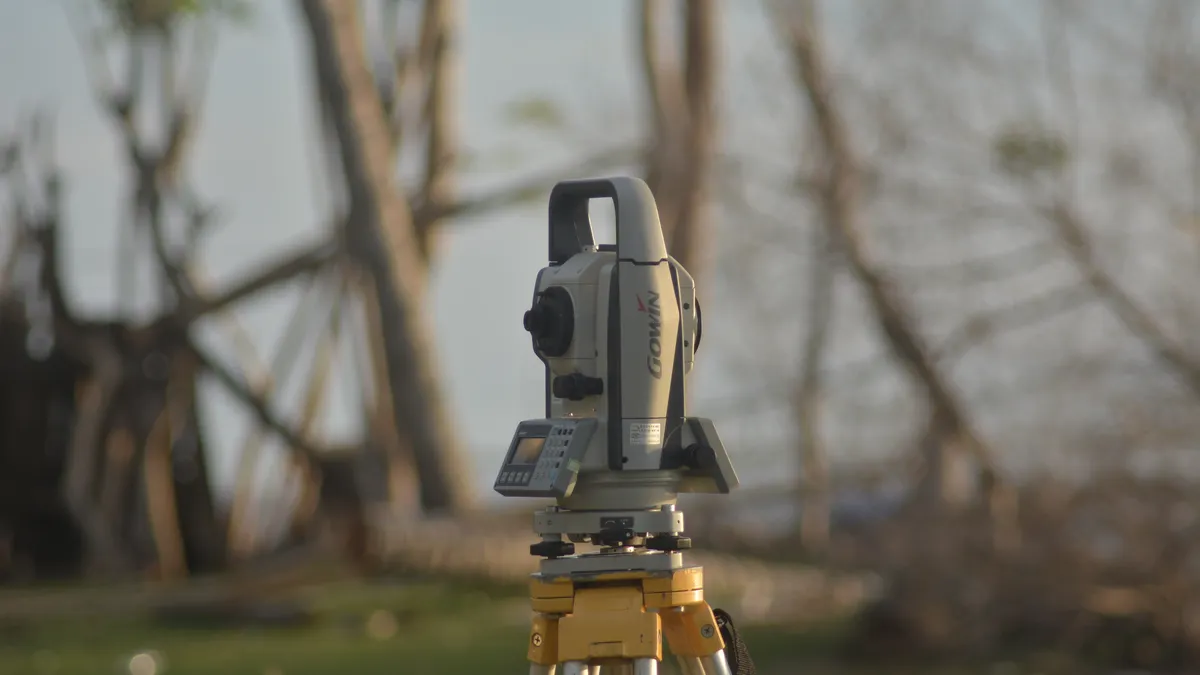
You need a measuring tape, 2 stakes, string, and either a line level or a laser level. A 25-foot tape is enough for many small yards, but a 50-foot tape makes the math easier if you want a longer run. A simple string line level is cheap, easy to read, and good for a first check. A laser level is faster across longer distances and is better when you want to compare several points without resetting the string every time.
Pick a straight path across the yard before you measure. One line should run away from the house toward the place you want water to go. If the yard has a swale, patio, driveway edge, or fence line that changes the flow, choose a second line across that feature too. That gives you a clearer picture than a single quick check.
You also need a place where the string can sit above grass, mulch, or low plants without touching them. If the string droops or brushes the turf, the reading shifts. A taller stake or a small notch in the stake helps keep the string steady.
This step is about getting a clean measurement, not deciding what to do next. If the question is whether the drainage path is wrong or the slope itself is wrong, this is the starting point. The hub on yard drainage problems and diagnosis belongs next, after you know the numbers.
How do you check yard slope with a level?
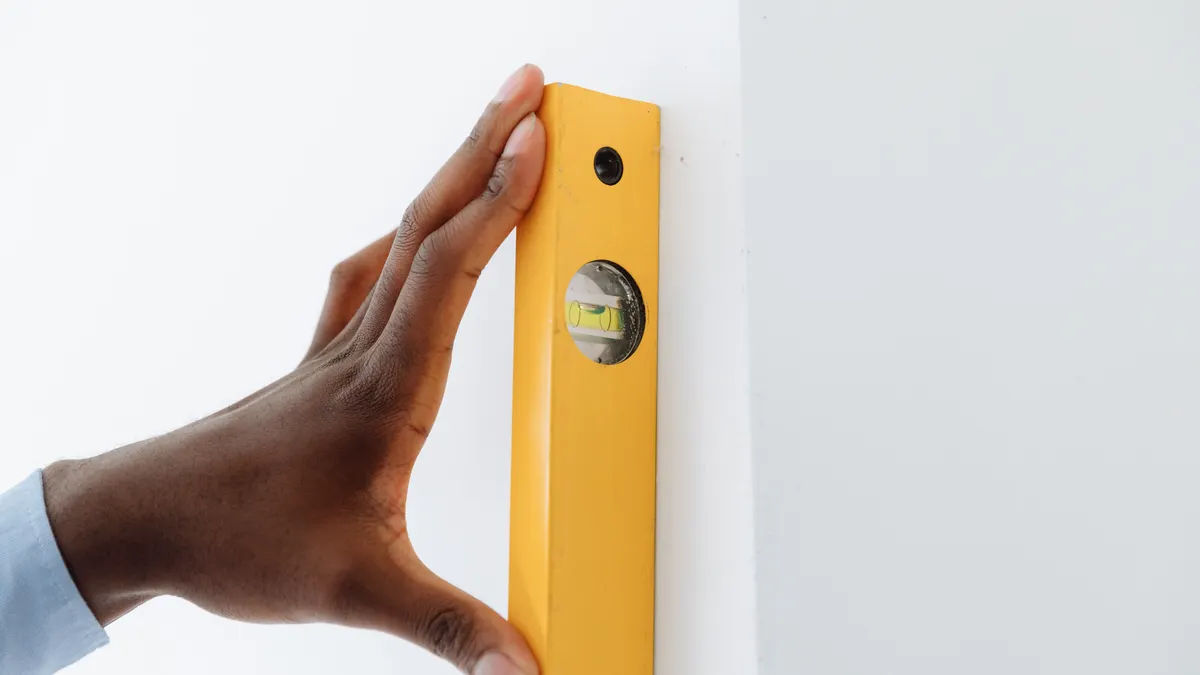
You check yard slope with a level by creating a level reference line, then measuring the vertical difference between that line and the ground at a known distance. The simplest setup uses two stakes, a taut string, and a line level.
- Drive one stake at the high point of the line and one stake downhill. Space them 10 feet, 20 feet, or 30 feet apart, depending on how much yard you want to test. A longer run gives a clearer slope number, but a shorter run is easier to set up in a tight side yard.
- Tie string between the stakes and hang a line level on it. Move the string up or down on one stake until the bubble sits centered. When the bubble is centered, the string is level.
- Measure from the string straight down to the ground at each stake. Use the tape measure and record both distances. If one end is 6 inches and the other is 3 inches, the ground differs by 3 inches over the run.
- Subtract the two measurements to find rise or fall. In the example above, the difference is 3 inches. That is your vertical change across the measured distance.
- Convert the result to percent slope. Divide the vertical change by the horizontal distance, then multiply by 100. A 3-inch change over 20 feet is 3 ÷ 240 × 100, or 1.25% slope.
- Repeat the same line in another spot if runoff still looks questionable. A second reading 5 to 10 feet away often shows whether the yard slopes consistently or changes direction.
When this works, the string stays level, the bubble stays centered, and the two tape measurements give you a repeatable difference. If the numbers jump around by more than about half an inch, the string is sagging, the stakes are loose, or the tape is not held straight.
What percent slope means for drainage
Percent slope tells you how much the yard drops over a given horizontal distance, and it is the cleanest way to compare one spot to another. It does not tell you everything about drainage, but it tells you whether the ground has enough tilt to move water.
The formula is commonly written as percent slope = rise ÷ run × 100. Use inches for both rise and run, or feet for both rise and run, but do not mix them. A yard that drops 2 inches over 10 feet has a different slope than one that drops 2 inches over 20 feet, even though the vertical change is the same.
A single slope number has limits. A yard can have a decent overall slope and still trap water in a shallow dip, a compacted strip, or a spot where runoff gets blocked by edging or a root flare. That is why slope measurement is a screening tool, not the whole diagnosis. It tells you whether the surface has a chance to drain as shaped.
Here is a practical way to read the number:
- Very small slope often means water moves slowly and may linger if the soil is heavy or the path is interrupted.
- Consistent slope away from the house usually means the issue may be more about a blockage or soil condition than the main grade line.
- A slope that changes direction across a short distance can create a pocket where runoff gathers.
Use the same measuring method every time so the numbers mean something. If you measure one line with a 10-foot run and another with a 30-foot run, the raw drop is not enough to compare. The percent slope lets you compare them fairly.
Measuring drainage direction without digging up the yard
You can measure drainage direction without digging up the yard by mapping which way the ground falls at several points instead of relying on one line. This matters because water follows the steepest available path, not just the nearest downhill edge.
Start with the line that runs away from the house. Then check two or three more lines that cross the yard at angles of about 30 to 90 degrees. A laser level is useful here because it lets you transfer the same height reference to multiple stakes without moving the tool every few feet. A line level works too, but you will reset it more often.
Look for three things:
- Where the ground is highest along each line
- Where the ground drops most quickly
- Where two lines disagree on the downhill direction
If one line falls away from the house but the next line falls toward a fence, the yard may be shedding water sideways before it exits. That does not automatically mean the grade is wrong. It may mean the drainage path is being redirected by a hard edge, a berm, or a low strip of turf.
The yard does not need to be a single plane. It can slope in one direction near the house and another direction near the back corner. The key is whether the measured direction helps water leave the area where it collects.
A good field check is to mark each stake with painter’s tape or a pen mark and note the readings on paper or in your phone. That makes it easier to compare measurements later, especially after a rain. If you come back after a storm, the same marked points help confirm whether the measured slope matches the wet pattern.
Common measurement mistakes that give the wrong answer
The wrong answer usually comes from a slack string, a bad distance, or measuring the wrong line. Each one changes the result enough to send you toward the wrong fix.
A sagging string is the most common error. Even a little dip in the middle makes the yard look flatter than it is. Keep the string tight and use the shortest span that still represents the area you care about. If the line is 30 feet long, a laser level is often easier to keep accurate than a loose string.
Another mistake is measuring along the ground instead of horizontally. The run in the slope formula is the horizontal distance, not the surface distance over bumps in the lawn. On a mild slope the difference is small, but it still matters when you are trying to compare one area to another.
A third mistake is using one line and treating it as the whole yard. That can hide a cross-slope or a shallow basin. Check at least two lines if the yard has an odd shape or if runoff seems to travel sideways.
It also helps to avoid reading the bubble before the string settles. A line level can drift for a moment after you move it. Wait a few seconds. If the bubble still sits centered, the reading is ready.
The trade-off with a simple string-and-level setup is speed versus coverage. It is quick for a narrow area, but it becomes tedious across a large, broken-up yard. That is where a laser level earns its place.
When to use a laser level instead of a line level
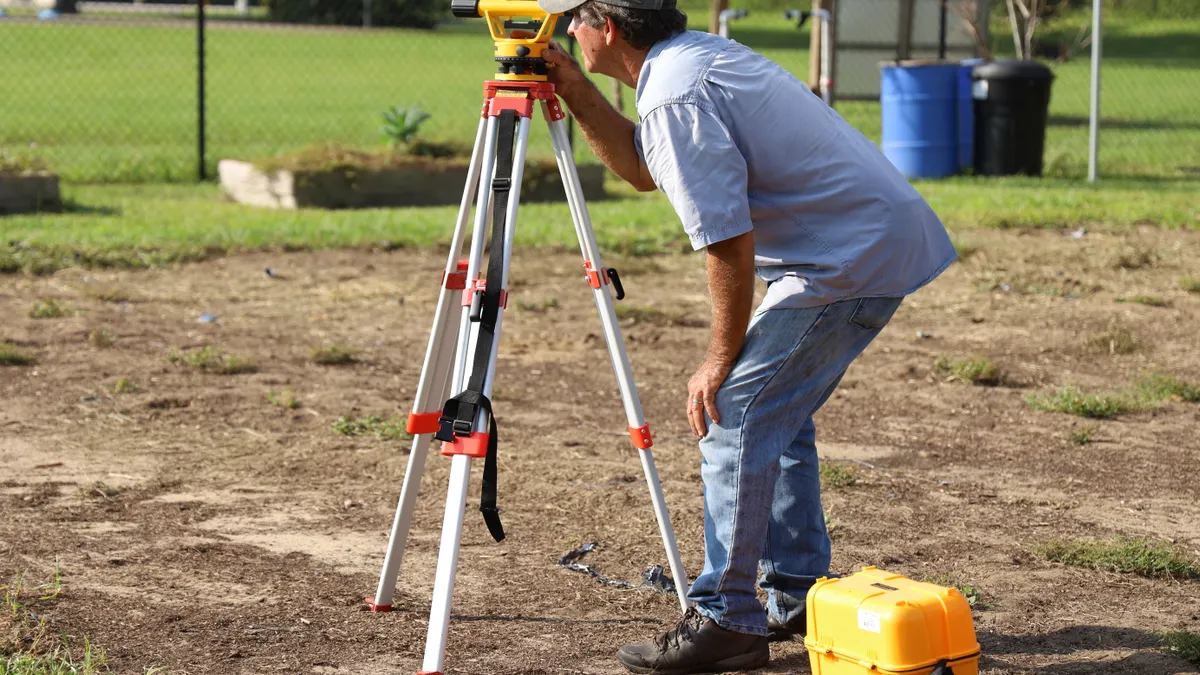
Use a laser level instead of a line level when the yard is long, uneven, or awkward to string. A laser level makes it easier to compare several stakes to the same reference height without stretching a line across every point.
A line level is fine for a short run, such as a side yard, a narrow strip beside a patio, or a straight line from the house to the back edge. It is cheap, simple, and easy to understand. A laser level is better when you want to check 3 or 4 spots at once, or when shrubs, steps, or furniture make a string hard to keep straight.
The setup is straightforward. Place the laser on a stable surface or tripod, turn it on, and establish a level beam across the yard. Then drive stakes at the points you want to measure and mark where the beam hits each stake. Measure from that mark down to the ground. The difference between points shows the slope.
The main drawback is cost and setup time. A laser level is more expensive than a line level, and cheap units can be finicky on bright days. If you are only checking one small drainage question, the simpler tool may be enough. If you need to compare several sections of lawn, the laser saves time and reduces guesswork.
This is the point where a homeowner can tell whether the problem is the shape of the yard or something else. If the slope reads consistently away from trouble spots, the drainage path may be the issue. If the slope is flat or inconsistent, the grade itself is probably part of the problem. That distinction is exactly what this measurement is for, and it keeps you from changing the yard before you know what you are changing.
How much slope should a yard have?
A yard should have enough slope to move water away from problem areas, but the exact target depends on the surface and layout. In practical terms, a small but consistent fall is easier to work with than a nearly flat run. If your reading is close to flat over 10 to 20 feet, that usually means the slope is weak enough to warrant a closer look at drainage paths.
How do you check yard slope with a level?
You check yard slope with a level by setting a level reference on a string or laser beam, then measuring the vertical difference between that reference and the ground over a known distance. The first thing to confirm is that the reference itself is level. Once the bubble is centered or the laser is set, the tape measurements tell you the rise and run.
Can you measure slope without removing sod?
Yes, you can measure slope without removing sod. The string, stake, and tape method sits above the grass, so it does not require digging or cutting turf. Just keep the string taut and high enough that blades, mulch, or uneven turf do not touch it, or the reading will drift.
Drafted with AI; not yet reviewed by a person.